
Hiring and Managing Japanese Chefs in Hong Kong: Visa, Salary and Retention (2026)
This guide answers the questions restaurant owners in Hong Kong ask us most often before hiring a Japanese chef from Japan. Salary ranges reflect the positions Washoku Agent has handled; visa facts come from official government pages, checked on 2026-10-29.
How much do Japanese chefs earn in Hong Kong?
Based on the positions Washoku Agent has handled in Hong Kong, advertised annual packages for Japanese chefs typically fall between JPY 6 and 10 million when converted, with the highest advertised packages reaching around JPY 12 million. These are offers at the time of advertising; the final package depends on city, concept and seniority.
Which roles and restaurant types hire Japanese chefs in Hong Kong?
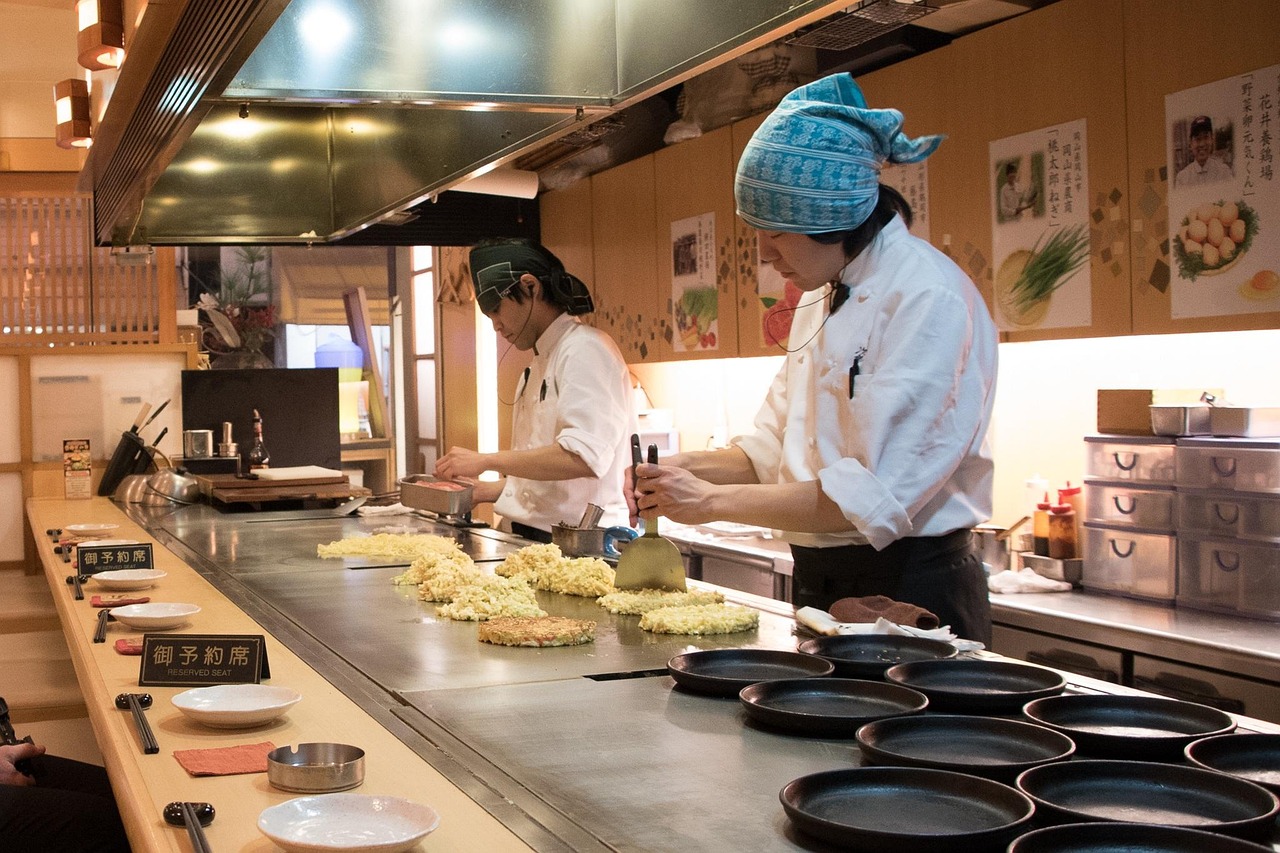
The demand we see in Hong Kong is concentrated in a few role types and concepts. The most common roles are head chef and junior chef positions, and the most common concepts are teppanyaki, sushi and high-end omakase.
Do Japanese chefs need to speak English, and is housing provided?
Nearly all of our listings accepted beginner-level English. Employers in Hong Kong generally prioritise cooking technique and experience; kitchen English develops on the job. A minority of our listings included housing or a housing allowance.
Which visa lets a restaurant in Hong Kong sponsor a Japanese chef?
An employment visa under the General Employment Policy (GEP), applied for online by the chef and the restaurant together. The Immigration Department asks for a good education background, normally a first degree, or technical qualifications and documented experience, a genuine vacancy that cannot readily be filled locally, and a package in line with the market level for professionals; there is no quota, no advert and no salary figure. The first visa runs 36 months and normally takes four weeks to decide. For cooks below professional level the Labour Department's Enhanced Supplementary Labour Scheme is a second route, with a six-week local recruitment, a 3:1 local-to-imported ratio for catering kitchens since 16 June 2026 and a levy of HKD 400 a month. Japan and Hong Kong also have a working holiday scheme: 1,500 places a year, ages 18 to 30, 12 months, no more than six months with one employer.
- Eligibility (ImmD, 16 April 2026): 'a good education background, normally a first degree in the relevant field', or 'good technical qualifications, proven professional abilities and/or relevant experience and achievements supported by documentary evidence'; a genuine vacancy; a confirmed offer in a job 'that cannot be readily taken up by the local work force'; a package 'broadly commensurate with the prevailing market level for professionals in the HKSAR'. No language test.
- Salary: no published GEP floor. The Labour Department's June 2026 medians are the public benchmark: HKD 19,670 a month for a Cook (Japanese Cuisine) and HKD 26,900 for a Chief Cook at a non-Chinese restaurant; under the ESLS these are the minimum for an imported cook.
- Employer documents: employment contract or letter of appointment, Business Registration Certificate, proof of financial standing (audited accounts, profit and loss account or profits tax return), company background, and a business plan if the company is under 12 months old. Form ID 990B for the company, ID 990A for the chef.
- Fees and time: application fee HKD 600 plus issuance fee HKD 1,300 (stay over 180 days), both per person including dependants, since 26 February 2025. Decision normally 4 weeks after all documents and the fee are received. Initial stay 36 months or the contract length if shorter; extensions on a 3-2 year pattern, filed at least six weeks before expiry, decided in two to three weeks. Top-tier stream after two years and HKD 2,000,000 of assessable income gives five years without conditions.
- Working holiday: scheme since 1 January 2010, quota 1,500 a year since 2016, ages 18 to 30, 12 months, visa free for Japanese citizens, HKD 20,000 of funds, no permanent employment and no more than six months with the same employer (raised from three months in 2018). Japanese nationals visit visa-free for 90 days but cannot work on that entry.
- Set the position, salary and benefits in a written contract at or above the market level for the role (use the Labour Department medians of HKD 19,670 to HKD 26,900 as the floor for the discussion), and collect the chef's certificates, employer references and a dated record of positions held.
- Prepare the company file: Business Registration Certificate, latest audited accounts or profits tax return, a company profile, and a business plan if the restaurant company is less than 12 months old.
- Submit the GEP application online: the chef's part (ID 990A) and the employer's part (ID 990B) with all documents, and pay the HKD 600 application fee; add dependants in the same application if needed. The ImmD normally decides within four weeks of receiving everything.
- On approval, pay the HKD 1,300 issuance fee, collect the visa label and send it to the chef; the chef enters Hong Kong with the label, because the 90-day visa-free visit does not allow work.
- Calendar the extension for month 33 (file within three months before expiry and at least six weeks before, HKD 600 plus HKD 1,300), keep the employment contract current, and seek prior approval from the ImmD before any change of employer or post.
Which visa lets a Hong Kong restaurant sponsor a Japanese chef?
An employment visa under the General Employment Policy (GEP), issued by the Immigration Department (ImmD) and applied for by the chef with the restaurant as the employing company. Hong Kong has no chef-specific visa and no quota under the GEP. The ImmD page (16 April 2026) says an application 'may be favourably considered' if there is no security objection and no known record of serious crime; the applicant 'has a good education background, normally a first degree in the relevant field', while 'good technical qualifications, proven professional abilities and/or relevant experience and achievements supported by documentary evidence may also be accepted'; 'there is a genuine job vacancy'; the applicant 'has a confirmed offer of employment and is employed in a job relevant to his/her academic qualifications or work experience that cannot be readily taken up by the local work force'; and 'the remuneration package including income, accommodation, medical and other fringe benefits is broadly commensurate with the prevailing market level for professionals in the HKSAR'. The chef completes form ID 990A and the restaurant completes ID 990B ('to be completed by the employing company'); both are submitted online with the supporting documents and the fee. There is no labour market test, but the 'cannot be readily taken up by the local work force' test is decided case by case, so a sushi or kaiseki chef trained in Japan is an easier case than a general line cook. A second route exists for cooks below professional level: the Labour Department's Enhanced Supplementary Labour Scheme (ESLS), which lists 'Cook (Japanese Cuisine)' and 'Chief Cook / No. 1 Cook' as common posts for non-Chinese catering. It is a labour-importation scheme with local-recruitment, manning-ratio and levy rules (see below) rather than a talent visa.
What does the chef have to show, and what is the salary rule?
Under the GEP the chef uploads a recent photograph, the passport, a Hong Kong identity card if any, and 'proof of academic qualifications and relevant work experience'. The page accepts technical qualifications, proven professional abilities or relevant experience and achievements 'supported by documentary evidence' in place of a degree, so a chef without a university degree should prepare employer references, culinary school certificates and a record of positions held. There is no published salary floor for the GEP: the test is that the package is 'broadly commensurate with the prevailing market level for professionals in the HKSAR'. For a benchmark of the market level, the Labour Department's List of Common Posts (revised 22 June 2026) gives median monthly wages of HKD 19,670 for a Cook (Japanese Cuisine) at a non-Chinese restaurant (Secondary 3 education, 1 year of experience, 9 working hours a day), HKD 26,900 for a Chief Cook or No. 1 Cook (Secondary 5, 5 years), and HKD 19,420 for a Cook (Japanese Cuisine) in a hotel. Those figures are the floor for imported workers under the ESLS, not a GEP threshold, but an offer below them is unlikely to read as 'commensurate with the market level for professionals'. Neither route has a language test; the GEP page lists none.
What does the restaurant have to show?
For the GEP, the employing company uploads the employment contract or letter of appointment stating post, salary, benefits and employment period; its Business Registration Certificate; proof of financial standing, for example an audited financial report, profit and loss account or profits tax return; documents on the company's background, business activities, products and markets; and, for a company set up within the last 12 months, a detailed business plan with source of funds, estimated capital injection, expected turnover and proposed local job posts. No paid-up capital figure, local-hiring ratio or advert is required. The ESLS is the opposite: the employer must show 'genuine difficulties in recruiting local workers at technician level or below', run a local recruitment exercise set by the Labour Department (advertise within 14 days of passing preliminary screening, at least 4 newspaper adverts or one online advert of 14 consecutive days, no contact details other than the Labour Department's, no restrictions on age or sex), pay the median monthly wage of a comparable position, and keep a manning ratio of full-time local employees to imported workers. The basic Tier 1 rule is 2 local full-time employees per imported worker and a four-week local recruitment period. Since 16 June 2026 the catering production section (cook, junior cook, barbecue cook, drink maker, bar supervisor) and the table service section are vetted under Tier 2: 3 local full-time employees per imported worker, counted across all posts in that section, a six-week local recruitment period, and attendance at a Labour Department job fair once every two weeks during it; an employer who misses the arranged job fair has the application rejected. The Labour Advisory Board is consulted on each case, the employment contract is a Standard Employment Contract of no more than 24 months, imported workers must return to their place of origin when it expires, and approval is not renewed automatically. Employers who gave false information on local staff have been barred from the scheme for a year (Labour Department sanction of 9 June 2026). The Labour Department pages we opened set no nationality rule, so confirm with the Supplementary Labour Division (2150 6363) that a chef recruited from Japan can be covered before you rely on this route.
How much are the fees, how long does it take, and how long can the chef stay?
GEP fees since 11 a.m. on 26 February 2025 (the GEP is a 'specified scheme' under Schedule 2 of the Immigration Regulations): an application fee of HKD 600 per application, payable by the principal applicant and each dependant and 'non-refundable in any circumstances', plus a visa or entry permit issuance fee on approval of HKD 1,300 where the period of stay is more than 180 days or HKD 600 where it is 180 days or less. A chef on a 36-month visa therefore pays HKD 1,900 in total; an extension costs the same HKD 600 plus HKD 1,300. The ImmD states that a GEP entry application 'normally takes four weeks upon receipt of all the required documents and the relevant application fee' and does not start processing until everything is received. Successful applicants 'will normally be granted an initial stay of 36 months on employment condition, or in accordance with the duration of the employment contract (whichever is shorter)', and extensions follow 'the 3-2 year pattern', also on employment condition; the chef applies within the three months before the limit of stay expires and in all cases at least six weeks before, and an extension normally takes two to three weeks. A chef who has worked under the GEP for at least two years and had an assessable income for salaries tax of HKD 2,000,000 or more in the previous year of assessment may apply under the top-tier employment stream for a five-year extension on time limitation only, with no employment condition; that income level is out of reach for most kitchen roles. The chef may bring a spouse and unmarried dependent children under 18 as dependants, who may work or study in Hong Kong; the sponsor must show the means to support them 'at a standard well above the subsistence level' and suitable accommodation. A change of employer needs the Director of Immigration's prior approval. Japanese nationals may visit Hong Kong without a visa for up to 90 days, but may not work on that entry; the employment visa label must be issued before the chef enters for work. Under the ESLS the employer pays the Employees Retraining Levy of HKD 400 for each month of the Standard Employment Contract, up to 24 months (HKD 9,600 for a two-year contract), in a lump sum after approval and before the Immigration Department issues the visa; it is not refundable. The Labour Department publishes no processing time for the ESLS; the local recruitment alone takes four or six weeks. The 'time' estimate on this page adds the official GEP steps (about 4 to 6 weeks when documents are complete) to the chef's notice period in Japan, usually 1 to 2 months.
Is there a working holiday route?
Yes. The Hong Kong and Japan Working Holiday Scheme has run since 1 January 2010 (Hong Kong Government press release of 27 October 2009, 250 places a year at the start) and the reciprocal annual quota was raised from 250 to 1,500 on 25 August 2016 (Labour Department Working Holiday Scheme website). The ImmD page (9 February 2026) sets the conditions for Japanese citizens: aged 18 to 30, ordinarily resident in Japan, primary intention to holiday, a stay of 'not more than 12 months', financial proof of at least HKD 20,000, a return air ticket or the funds to buy one, and 'sufficient medical insurance'; the visa is 'free of charge' for Japanese citizens and is applied for online. Work is allowed only as 'an incidental aspect of their holiday' and 'permanent employment is not permitted'; Japanese citizens are 'not allowed to work for the same employer for more than six months'. That six-month limit replaced the earlier three-month limit for visas obtained from 1 January 2018 (Consulate-General of Japan in Hong Kong notice, 22 December 2017). The page sets no occupational restriction, so a working-holiday chef can work in your kitchen for up to six months and then must move to another employer or switch to a GEP visa, which needs a fresh application and the HKD 600 plus HKD 1,300 fees.
Official sources used in this section (checked 2026-10-29)
- Immigration Department: General Employment Policy for professionals (eligibility criteria, documents, four-week processing, 36-month initial stay, 3-2 year extension pattern, top-tier employment stream, dependants; page dated 16 April 2026)
- Immigration Department: Fee structure for visa applications under specified schemes (application fee HKD 600, issuance fee HKD 1,300 or HKD 600, from 11 a.m. 26 February 2025; GEP listed)
- Immigration Department: Fee table (ordinary visa under a specified scheme HKD 1,300 or HKD 600; application fee HKD 600; page dated 8 April 2026)
- Immigration Department: Form ID 990A, application for entry for employment as professionals (to be completed by the applicant)
- Immigration Department: Form ID 990B, application for employing professionals in Hong Kong (to be completed by the employing company)
- Immigration Department: Visit visa and entry permit requirements (Japan: 90 days visa-free)
- Immigration Department: Working Holiday Scheme (Japan annual quota 1,500, aged 18 to 30, 12 months, six months per employer, free visa for Japanese citizens, HKD 20,000 funds; page dated 9 February 2026)
- Hong Kong Government press release: HK signs Working Holiday Scheme with Japan (27 October 2009; scheme from 1 January 2010; 250 places a year)
- Labour Department Working Holiday Scheme website: Hong Kong/Japan annual quota increased from 250 to 1,500 (25 August 2016)
- Consulate-General of Japan in Hong Kong: relaxation of the same-employer limit from 3 to 6 months for Japanese participants from 1 January 2018 (22 December 2017)
- Labour Department: Enhanced Supplementary Labour Scheme (eligibility at technician level or below, median monthly wage rule, 24-month Standard Employment Contract, levy HKD 400 a month up to 24 months, sanctions)
- Labour Department: ESLS List of Common Posts, revised 22 June 2026 (Cook (Japanese Cuisine) 6.2.123 HKD 19,670; Chief Cook / No. 1 Cook 6.9.13 HKD 26,900; hotel Cook (Japanese Cuisine) 6.1.28 HKD 19,420)
- Labour Department: ESLS List of Catering-related Posts, Rev 06/26 (from 16 June 2026: 3:1 manning ratio per section, six-week local recruitment, job fair every two weeks)
- Labour Department: ESLS requirements on placing recruitment advertisements during the local recruitment period, Rev 05/26 (4 newspaper adverts or 14-day online advert within 14 days of screening)
- Hong Kong Government press release: review results of the ESLS and enhanced measures (15 June 2026; Tier 1 2:1 and four weeks, Tier 2 catering 3:1 and six weeks, accommodation deduction 20%, sanctions up to five years)
- Hong Kong Government press release: employer sanctioned for false information on local recruitment under the ESLS (9 June 2026)
- Legislative Council question LCQ3: enhancing labour importation schemes (10 July 2024; ESLS since 4 September 2023, median wage rule, four-week local recruitment, levy HKD 400 a month under the Employees Retraining Ordinance, HKD 9,600 for two years)
- Legislative Council question LCQ4: Enhanced Supplementary Labour Scheme (16 April 2025; 7,864 applications and 54,278 imported workers approved from 4 September 2023-31 March 2025)
- Legislative Council question LCQ5: Enhanced Supplementary Labour Scheme (28 January 2026; over 14,900 applications and 96,100 imported workers approved to December 2025; waiter, junior cook and cook the largest posts; 2:1 per-post ratio and six-week recruitment for junior cooks since September 2025)
Rules change. We confirm the current requirements with the employer before an offer.
Where do restaurants in Hong Kong find Japanese chefs?
Hong Kong has about 1,480 Japanese restaurants in the agriculture ministry's November 2025 count, up 80 from the 2023 survey, and the Census and Statistics Department figure quoted by JETRO's JFOODO office is the same 1,480 for 2024, the largest non-Chinese cuisine ahead of Thai (390). The Japanese resident community is 23,228 people (October 2025, up 1.5%, the tenth-largest Japanese community in any city abroad). Hong Kong also has Japanese-language free papers and classifieds with small job sections; the channels below are the ones with verifiable listings: the two English-language job banks, the Japanese-speaking recruitment agencies that post on them, the Japan-side career sites, and the working-holiday pool. No government advert is required before a General Employment Policy application; the Enhanced Supplementary Labour Scheme, by contrast, requires a six-week local recruitment with job fairs before a cook can be imported.
Washoku Agent sits alongside these channels as the specialist route: we hold a registered pool of Japanese chefs, screen for technique and willingness to relocate, interpret interviews and manage the paperwork. You can run local channels in parallel and use us for the chef you cannot find locally.
Hire from Japan or from the local market in Hong Kong?
Hong Kong gives you two sponsored routes and one trial route. The General Employment Policy visa covers a chef whose training and experience are documented, with no quota, no advert and no salary figure, but the package must sit at the market level for professionals and the first visa runs 36 months. The Enhanced Supplementary Labour Scheme covers cooks below professional level and, since 16 June 2026, demands three local full-time kitchen staff per imported cook, a six-week local recruitment with job fairs every two weeks, the median wage (HKD 19,670 for a Cook (Japanese Cuisine), HKD 26,900 for a Chief Cook) and a levy of HKD 400 a month. The working holiday scheme (1,500 places a year, ages 18 to 30) lets a Japanese cook work for you for up to six months without sponsorship. Local hiring draws on 23,228 Japanese residents (October 2025) and on Hong Kong-trained cooks from the job banks.
- Widest choice of trained sushi, kaiseki and washoku chefs, and the pay on offer is visible to them: Japan-side listings for Hong Kong quoted up to HKD 50,000 a month for a head chef with visa support (Kamome, September 2026).
- The General Employment Policy has no salary floor, but the offer must read as the market level for professionals: JobsDB postings for Japanese-speaking chefs and head chefs in October 2026 ran at HKD 25,000 to 35,000 a month, and the Labour Department's medians are HKD 19,670 for a Japanese-cuisine cook and HKD 26,900 for a chief cook. A degree is the normal case; without one, the chef's certificates, references and record of positions carry the application.
- The official steps are short: four weeks for a complete General Employment Policy application, two to three weeks for an extension, and no advert or capital test. The chef's notice period in Japan sets the real start date.
- A working-holiday cook aged 18 to 30 can start within weeks and work six months with you; use that window to decide on the General Employment Policy application, which needs a fresh fee of HKD 600 plus HKD 1,300.
- Faster start: a chef already in Hong Kong can do a trial shift in person, and a transfer needs the Director of Immigration's approval but no entry formalities.
- The Japanese community is 23,228 people across the whole territory, so the pool of Japanese chefs is small and visible to every competitor; the Japanese-affiliated agencies and the two job banks are where they are approached.
- Hong Kong-trained cooks are on the job banks, but the market is tight at both ends: the Census and Statistics Department counted 3,530 vacancies in food and beverage services in June 2026 against 218,100 persons engaged, while catering unemployment stood at 6.4% in August 2025 and the Hong Kong Federation of Restaurants and Related Trades said there was 'temporarily no need to import new foreign labor' after approved quotas reached 30,000. Operators who import cooks say the levy and accommodation leave little saving.
- Operators interviewed by JETRO's JFOODO office in September 2025 describe falling sales, customers eating in Shenzhen or Japan instead, and uneven service from fast staff turnover; a chef who stays and trains the team is worth more here than in a growing market.
Common hiring challenges in Hong Kong, and how to keep the chef
What owners and chefs say in public, in their own words:
“家賃や人件費などのコスト上昇の影響も大きいです。物価高騰や労働市場の逼迫により運営コストが増大し、メニュー価格の見直しや効率化が求められ、業界全体の収益性に影響を与えるでしょう。”Kinjo Masahiro, owner of Izakaya Kinjo in Central, a chef from Okinawa who has lived in Hong Kong for 13 years: 'Rising rent and labour costs weigh heavily. Inflation and a tight labour market are pushing up operating costs, forcing price reviews and efficiency drives, and that will hit the profitability of the whole industry', JETRO JFOODO field marketer report, Hong Kong, October 2025 (interview 11 September 2025)
“一部の飲食店では、スタッフのトレーニング不足や入れ替わりの速さによりサービスの品質にバラつきが見られます。”David Lee, owner of Tanuki Yataiya, a Japanese restaurant run by a Hong Kong owner for more than ten years: 'At some restaurants, a lack of staff training and fast turnover make service quality uneven', JETRO JFOODO field marketer report, Hong Kong, October 2025 (interview 11 September 2025)
“If you can't hire people, you can't keep making clay pot rice.”Owner of Hing Kee Restaurant, a 44-year-old claypot rice restaurant in Temple Street with five outlets, after no local applicant came forward at HKD 30,000 a month and three hires quit within two weeks, The Standard, August 2026
✓ Housing allowance stated in the offer and help with the first lease and deposit
✓ Return flight to Japan once a year in the package
✓ Menu ownership: the chef's own omakase or seasonal course within the first year
✓ A named bilingual colleague for the first three months, and the visa extension calendared by the employer
Sources for this section (checked 2026-10-29)
- Immigration Department: General Employment Policy for professionals (eligibility, four-week processing, 36-month stay, change of employment approval)
- Immigration Department: fee structure for specified schemes (HKD 600 application fee, HKD 1,300 issuance fee)
- Immigration Department: Working Holiday Scheme (Japan quota 1,500, ages 18 to 30, 12 months, six months per employer)
- Labour Department: Enhanced Supplementary Labour Scheme (median wage rule, 24-month contract, levy HKD 400 a month)
- Labour Department: ESLS List of Common Posts, revised 22 June 2026 (Cook (Japanese Cuisine) HKD 19,670; Chief Cook HKD 26,900)
- Labour Department: ESLS List of Catering-related Posts, Rev 06/26 (3:1 ratio per section, six-week recruitment, job fair every two weeks from 16 June 2026)
- Hong Kong Government press release: ESLS review results and enhanced measures (15 June 2026)
- Hong Kong Government press release: employer sanctioned for false information under the ESLS (9 June 2026)
- Legislative Council question LCQ5 on the ESLS (28 January 2026; over 96,100 imported workers approved to December 2025, waiter, junior cook and cook the largest posts)
- Census and Statistics Department: statistics on persons engaged and vacancies for June 2026 (food and beverage services 3,530 vacancies, 218,100 persons engaged; 18 September 2026)
- Ministry of Agriculture, Forestry and Fisheries: Japanese restaurants overseas by country and region, 28 November 2025 (Hong Kong about 1,480, up 80)
- JETRO: Hong Kong agri-food market basics (1,400 Japanese restaurants per the agriculture ministry count; updated July 2025)
- JETRO JFOODO field marketer report, Hong Kong: sales and challenges of Japanese restaurants, interviews with Izakaya Kinjo and Tanuki Yataiya (October 2025; 1,480 Japanese restaurants in 2024 per the Census and Statistics Department)
- Ministry of Foreign Affairs of Japan via e-Stat: Japanese nationals overseas as of 1 October 2025 (Hong Kong 23,228, up 1.5%, tenth-largest city)
- JobsDB Hong Kong: Japanese chef jobs, 214 postings (October 2026)
- Indeed Hong Kong: chef Japanese restaurant jobs, 50+ postings (29 October 2026)
- Kamome Asia Tenshoku: Hong Kong and Macau listings, 18 (29 October 2026)
- Kamome Asia Tenshoku: head chef, high-end Japanese restaurant, up to HKD 50,000 (e-Job Agency, 11 September 2026)
- Kamome Asia Tenshoku: pastry sous chef, HKD 35,000 to 40,000 with housing (17 August to 17 November 2026)
- Middle no Tenshoku: chef roles in Hong Kong, no listing (29 October 2026)
- The Standard: HKD 30,000 monthly pay fails to attract local claypot rice cooks (17 August 2026)
- The Standard: Hong Kong restaurant industry divided over foreign labour imports as unemployment rises (22 August 2025; catering unemployment 6.4%, approved quotas 30,000)
- The Standard: Waso Cafe banned from importing labour for one year (10 August 2026)
- South China Morning Post via The Star: Hong Kong restaurants thinking outside the box to survive (17 January 2026; receipts down 0.1% in 2024 and 0.4% in the first three quarters of 2025)
Not ready to hire full-time? Start with a project: a Japanese chef can develop a menu or train your team for a few weeks. See how a project works.
How do restaurants in Hong Kong hire a Japanese chef through Washoku Agent?
Frequently asked questions
Which visa lets a restaurant in Hong Kong sponsor a Japanese chef?
An employment visa under the General Employment Policy (GEP), applied for online by the chef and the restaurant together. The Immigration Department asks for a good education background, normally a first degree, or technical qualifications and documented experience, a genuine vacancy that cannot readily be filled locally, and a package in line with the market level for professionals; there is no quota, no advert and no salary figure. The first visa runs 36 months and normally takes four weeks to decide. For cooks below professional level the Labour Department's Enhanced Supplementary Labour Scheme is a second route, with a six-week local recruitment, a 3:1 local-to-imported ratio for catering kitchens since 16 June 2026 and a levy of HKD 400 a month. Japan and Hong Kong also have a working holiday scheme: 1,500 places a year, ages 18 to 30, 12 months, no more than six months with one employer.
Which visa lets a Hong Kong restaurant sponsor a Japanese chef?
An employment visa under the General Employment Policy (GEP), issued by the Immigration Department (ImmD) and applied for by the chef with the restaurant as the employing company. Hong Kong has no chef-specific visa and no quota under the GEP. The ImmD page (16 April 2026) says an application 'may be favourably considered' if there is no security objection and no known record of serious crime; the applicant 'has a good education background, normally a first degree in the relevant field', while 'good technical qualifications, proven professional abilities and/or relevant experience and achievements supported by documentary evidence may also be accepted'; 'there is a genuine job vacancy'; the applicant 'has a confirmed offer of employment and is employed in a job relevant to his/her academic qualifications or work experience that cannot be readily taken up by the local work force'; and 'the remuneration package including income, accommodation, medical and other fringe benefits is broadly commensurate with the prevailing market level for professionals in the HKSAR'. The chef completes form ID 990A and the restaurant completes ID 990B ('to be completed by the employing company'); both are submitted online with the supporting documents and the fee. There is no labour market test, but the 'cannot be readily taken up by the local work force' test is decided case by case, so a sushi or kaiseki chef trained in Japan is an easier case than a general line cook. A second route exists for cooks below professional level: the Labour Department's Enhanced Supplementary Labour Scheme (ESLS), which lists 'Cook (Japanese Cuisine)' and 'Chief Cook / No. 1 Cook' as common posts for non-Chinese catering. It is a labour-importation scheme with local-recruitment, manning-ratio and levy rules (see below) rather than a talent visa.
What does the chef have to show, and what is the salary rule?
Under the GEP the chef uploads a recent photograph, the passport, a Hong Kong identity card if any, and 'proof of academic qualifications and relevant work experience'. The page accepts technical qualifications, proven professional abilities or relevant experience and achievements 'supported by documentary evidence' in place of a degree, so a chef without a university degree should prepare employer references, culinary school certificates and a record of positions held. There is no published salary floor for the GEP: the test is that the package is 'broadly commensurate with the prevailing market level for professionals in the HKSAR'. For a benchmark of the market level, the Labour Department's List of Common Posts (revised 22 June 2026) gives median monthly wages of HKD 19,670 for a Cook (Japanese Cuisine) at a non-Chinese restaurant (Secondary 3 education, 1 year of experience, 9 working hours a day), HKD 26,900 for a Chief Cook or No. 1 Cook (Secondary 5, 5 years), and HKD 19,420 for a Cook (Japanese Cuisine) in a hotel. Those figures are the floor for imported workers under the ESLS, not a GEP threshold, but an offer below them is unlikely to read as 'commensurate with the market level for professionals'. Neither route has a language test; the GEP page lists none.
What does the restaurant have to show?
For the GEP, the employing company uploads the employment contract or letter of appointment stating post, salary, benefits and employment period; its Business Registration Certificate; proof of financial standing, for example an audited financial report, profit and loss account or profits tax return; documents on the company's background, business activities, products and markets; and, for a company set up within the last 12 months, a detailed business plan with source of funds, estimated capital injection, expected turnover and proposed local job posts. No paid-up capital figure, local-hiring ratio or advert is required. The ESLS is the opposite: the employer must show 'genuine difficulties in recruiting local workers at technician level or below', run a local recruitment exercise set by the Labour Department (advertise within 14 days of passing preliminary screening, at least 4 newspaper adverts or one online advert of 14 consecutive days, no contact details other than the Labour Department's, no restrictions on age or sex), pay the median monthly wage of a comparable position, and keep a manning ratio of full-time local employees to imported workers. The basic Tier 1 rule is 2 local full-time employees per imported worker and a four-week local recruitment period. Since 16 June 2026 the catering production section (cook, junior cook, barbecue cook, drink maker, bar supervisor) and the table service section are vetted under Tier 2: 3 local full-time employees per imported worker, counted across all posts in that section, a six-week local recruitment period, and attendance at a Labour Department job fair once every two weeks during it; an employer who misses the arranged job fair has the application rejected. The Labour Advisory Board is consulted on each case, the employment contract is a Standard Employment Contract of no more than 24 months, imported workers must return to their place of origin when it expires, and approval is not renewed automatically. Employers who gave false information on local staff have been barred from the scheme for a year (Labour Department sanction of 9 June 2026). The Labour Department pages we opened set no nationality rule, so confirm with the Supplementary Labour Division (2150 6363) that a chef recruited from Japan can be covered before you rely on this route.
How much are the fees, how long does it take, and how long can the chef stay?
GEP fees since 11 a.m. on 26 February 2025 (the GEP is a 'specified scheme' under Schedule 2 of the Immigration Regulations): an application fee of HKD 600 per application, payable by the principal applicant and each dependant and 'non-refundable in any circumstances', plus a visa or entry permit issuance fee on approval of HKD 1,300 where the period of stay is more than 180 days or HKD 600 where it is 180 days or less. A chef on a 36-month visa therefore pays HKD 1,900 in total; an extension costs the same HKD 600 plus HKD 1,300. The ImmD states that a GEP entry application 'normally takes four weeks upon receipt of all the required documents and the relevant application fee' and does not start processing until everything is received. Successful applicants 'will normally be granted an initial stay of 36 months on employment condition, or in accordance with the duration of the employment contract (whichever is shorter)', and extensions follow 'the 3-2 year pattern', also on employment condition; the chef applies within the three months before the limit of stay expires and in all cases at least six weeks before, and an extension normally takes two to three weeks. A chef who has worked under the GEP for at least two years and had an assessable income for salaries tax of HKD 2,000,000 or more in the previous year of assessment may apply under the top-tier employment stream for a five-year extension on time limitation only, with no employment condition; that income level is out of reach for most kitchen roles. The chef may bring a spouse and unmarried dependent children under 18 as dependants, who may work or study in Hong Kong; the sponsor must show the means to support them 'at a standard well above the subsistence level' and suitable accommodation. A change of employer needs the Director of Immigration's prior approval. Japanese nationals may visit Hong Kong without a visa for up to 90 days, but may not work on that entry; the employment visa label must be issued before the chef enters for work. Under the ESLS the employer pays the Employees Retraining Levy of HKD 400 for each month of the Standard Employment Contract, up to 24 months (HKD 9,600 for a two-year contract), in a lump sum after approval and before the Immigration Department issues the visa; it is not refundable. The Labour Department publishes no processing time for the ESLS; the local recruitment alone takes four or six weeks. The 'time' estimate on this page adds the official GEP steps (about 4 to 6 weeks when documents are complete) to the chef's notice period in Japan, usually 1 to 2 months.
Is there a working holiday route?
Yes. The Hong Kong and Japan Working Holiday Scheme has run since 1 January 2010 (Hong Kong Government press release of 27 October 2009, 250 places a year at the start) and the reciprocal annual quota was raised from 250 to 1,500 on 25 August 2016 (Labour Department Working Holiday Scheme website). The ImmD page (9 February 2026) sets the conditions for Japanese citizens: aged 18 to 30, ordinarily resident in Japan, primary intention to holiday, a stay of 'not more than 12 months', financial proof of at least HKD 20,000, a return air ticket or the funds to buy one, and 'sufficient medical insurance'; the visa is 'free of charge' for Japanese citizens and is applied for online. Work is allowed only as 'an incidental aspect of their holiday' and 'permanent employment is not permitted'; Japanese citizens are 'not allowed to work for the same employer for more than six months'. That six-month limit replaced the earlier three-month limit for visas obtained from 1 January 2018 (Consulate-General of Japan in Hong Kong notice, 22 December 2017). The page sets no occupational restriction, so a working-holiday chef can work in your kitchen for up to six months and then must move to another employer or switch to a GEP visa, which needs a fresh application and the HKD 600 plus HKD 1,300 fees.
Can a restaurant in Hong Kong hire a Japanese chef who is still in Japan?
Yes. The employer sponsors the visa and Washoku Agent handles sourcing, screening and the pre-arrival process. See the visa section above for the routes and official sources.
What salary should we budget for a Japanese chef in Hong Kong?
Based on the positions Washoku Agent has handled in Hong Kong, advertised annual packages for Japanese chefs typically fall between JPY 6 and 10 million when converted, with the highest advertised packages reaching around JPY 12 million. These are offers at the time of advertising; the final package depends on city, concept and seniority.
Does Washoku Agent charge the chef?
No. Registration, consultation and introductions are free for chefs. Employers pay for the recruitment service.
How long does the whole process take?
Typically 2 to 3 months from first consultation to the chef's arrival, depending on the visa route and processing times.
- Hiring and Managing Japanese Chefs in Malaysia: Visa, Salary and Retention (2026)
- Hiring and Managing Japanese Chefs in Vietnam: Visa, Salary and Retention (2026)

Related posts

Hiring and Managing Japanese Chefs in Vietnam: Visa, Salary and Retention (2026)
Hiring and Managing Japanese Chefs in Malaysia: Visa, Salary and Retention (2026)

Hiring and Managing Japanese Chefs in Thailand: Visa, Salary and Retention (2026)