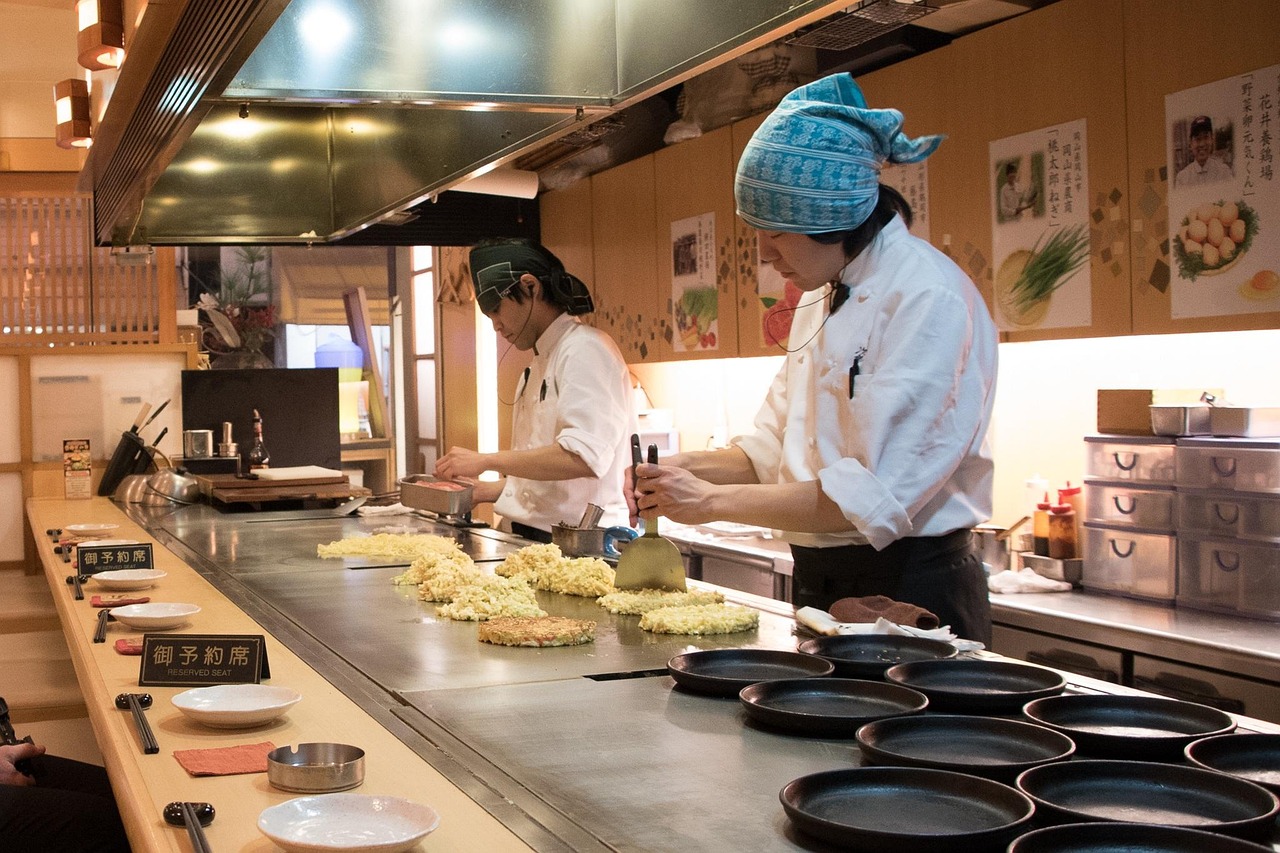

Hiring and Managing Japanese Chefs in Thailand: Visa, Salary and Retention (2026)
This guide answers the questions restaurant owners in Thailand ask us most often before hiring a Japanese chef from Japan. Salary ranges reflect the positions Washoku Agent has handled; visa facts come from official government pages, checked on 2026-10-29.
How much do Japanese chefs earn in Thailand?
Based on the positions Washoku Agent has handled in Thailand, advertised annual packages for Japanese chefs typically fall between JPY 5 and 6 million when converted, with the highest advertised packages reaching around JPY 8 million. These are offers at the time of advertising; the final package depends on city, concept and seniority.
Which roles and restaurant types hire Japanese chefs in Thailand?
The demand we see in Thailand is concentrated in a few role types and concepts. The most common roles are head chef and junior chef positions, and the most common concepts are sushi, kaiseki and clay-pot rice.
Do Japanese chefs need to speak English, and is housing provided?
Nearly all of our listings accepted beginner-level English. Employers in Thailand generally prioritise cooking technique and experience; kitchen English develops on the job. A minority of our listings included housing or a housing allowance.
Which visa lets a restaurant in Thailand sponsor a Japanese chef?
A work permit from the Department of Employment, held with a Non-Immigrant B visa and renewed through a one-year extension of stay from the Immigration Bureau. Cooking is not on the Ministry of Labour's list of occupations closed to foreigners, so an ordinary restaurant can sponsor a Japanese chef if it has THB 2,000,000 of paid-up capital per foreigner and, for the extension, 4 Thai employees per foreigner and a salary of at least THB 50,000 a month. Japan has no working holiday agreement with Thailand.
- Salary: the Department of Employment sets no floor for the work permit; the Immigration Bureau requires at least THB 50,000 a month for the one-year extension (BOI One Stop Service FAQ), paid and taxed in Thailand. Confirm the current figure for Japanese nationals with Immigration Division 1.
- Chef documents: passport, education certificate or experience letters from past employers, medical certificate, photos, the restaurant's employment letter. No language test.
- Employer test: THB 2,000,000 of paid-up capital per work permit (up to 10) under the Department of Employment's 2009 criteria; for the extension, audited accounts for 2 years and 4 permanent Thai employees per foreigner on the PND.1 and social security forms.
- Fees and time: work permit THB 100 plus THB 3,000 a year, issued within 1 working day when complete (5 working days if more facts are needed); visa JPY 11,000 at the consulates in Osaka and Fukuoka; extension THB 1,900; re-entry permit THB 1,000 or THB 3,800.
- After arrival: work permit within the 90-day initial stay, employer's start notification within 15 days, TM.30 by the landlord within 24 hours, 90-day address report, and the extension before the 90 days run out.
- Check that the restaurant company has THB 2,000,000 of paid-up capital, 4 Thai employees on payroll and social security, and audited accounts, and prepare the employment letter stating a salary of THB 50,000 a month or more.
- The restaurant sends the chef an invitation letter and its company registration certificate; the chef applies for a Non-Immigrant B visa on the Thai e-Visa site (JPY 11,000 single entry, valid 3 months). Japanese nationals are in principle exempt from the WP3 pre-approval letter.
- The chef enters Thailand (90-day stay) and the employer files the work permit application (form Tor Tor 1) with the chef's passport, experience letters, medical certificate and the company documents, paying THB 100 plus THB 3,000 for a one-year permit; the office issues it within 1 working day when complete.
- The employer notifies the Department of Employment within 15 days of the start date; the landlord files TM.30 within 24 hours of the chef moving in.
- Before the 90 days end, the chef applies at the Immigration Bureau for the one-year extension (TM.7, THB 1,900, in person) with the work permit, the company's tax, VAT and social security filings and photos of the restaurant; then buys a re-entry permit before any trip and reports the address every 90 days.
Which permit lets a Thai restaurant sponsor a Japanese chef?
A work permit from the Department of Employment (Ministry of Labour), held together with a Non-Immigrant B visa and, after arrival, a one-year extension of stay from the Immigration Bureau. Thailand has no chef-specific visa. The Ministry of Labour's notification on occupations prohibited to foreigners (Government Gazette, 21 April 2020, in force 60 days later) lists 27 occupations closed to foreigners and 13 open under conditions; cooking and chef work are not on any of the four lists, so a restaurant can employ a Japanese chef with an ordinary work permit. The employer or the chef files form Tor Tor 1 (ตท.1) at the Bangkok Area Employment Office 1 to 10 or the provincial office for the restaurant's location when the chef is already in Thailand on a Non-Immigrant visa, or form Tor Tor 3 (ตท.3) before the chef enters. There is no quota and no labour market test for the work permit itself.
What does the chef have to show, and what is the salary rule?
The Department of Employment asks for the chef's passport, proof of education or letters from past employers showing work experience, a medical certificate, three photos, and the restaurant's employment letter; the chef signs the permit in front of the officer. The Department sets no salary condition for the work permit: the BOI's One Stop Service centre records the Department's answer that it 'doesn't have condition about the monthly salary'. The salary test belongs to the Immigration Bureau's one-year extension of stay, where the same BOI page records the Bureau's condition that 'the foreigner is required to earn minimum 50,000 baht as his/her monthly salary'. The Immigration Bureau sets that income floor by nationality in its own criteria table; the Bureau's website blocks automated access, so we could not open the table itself. Confirm the current figure for Japanese nationals with Immigration Division 1 before the offer, and budget at least THB 50,000 a month. The Immigration Bureau also asks for the chef's personal income tax return (PND.91) and the company's withholding tax return (PND.1) showing the chef's name, so the salary must be paid and taxed in Thailand. There is no Thai-language test.
What does the restaurant have to show?
Two sets of rules apply. For the work permit, the Department of Employment's criteria regulation of 2009 (B.E. 2552) allows one work permit for an employer with paid-up registered capital of at least THB 2,000,000, plus one more permit for every further THB 2,000,000, up to 10 permits; the capital figure is halved when the foreigner has a Thai spouse. Alternatives in the same regulation are an employer that paid at least THB 3,000,000 of income tax in the previous year, exported goods bringing in at least THB 30,000,000, brought in at least 5,000 foreign tourists, or employs at least 100 Thai employees, each judged 'as necessary and appropriate'. A company registered abroad needs THB 3,000,000 of capital brought in from abroad per permit. For the one-year extension of stay, the Immigration Office's criteria published by the Government Public Relations Department require a paid-up capital of at least THB 2,000,000, audited financial statements for the past two fiscal years, evidence that the business needs the foreigner (for example a job advertisement that drew no Thai applicants), and 'a ratio of 1 foreign employee / 4 permanent Thai employees'; the Thai employees must appear on the withholding tax return (PND.1) and the social security form (Sor.Por.Sor. 1-10) for the last 3 months. Representative offices and regional offices get a 1 to 1 ratio instead; an ordinary restaurant does not. A new restaurant therefore needs at least one audited year of accounts, 4 Thai staff on payroll and social security, and THB 2,000,000 of paid-up capital before the first one-year extension.
How much are the fees, how long does it take, and how long can the chef stay?
Work permit (Department of Employment manual): application fee THB 100 per application; permit fee THB 750 for a permit of up to 3 months, THB 1,500 for 3 to 6 months, THB 3,000 for 6 months to 1 year, and the same scale again for each period beyond a year. The Department's time-limit regulation of 17 December 2014 tells officers to issue a permit that fits the 2009 criteria within 1 working day of receiving a complete application, and to finish within 5 working days when more facts are needed. Visa: the Royal Thai Consulates-General in Osaka and Fukuoka list the Non-Immigrant B visa at JPY 11,000 for single entry (valid 3 months from issue) and JPY 26,000 for multiple entry, paid by credit card on the e-Visa site; the Osaka sheet (September 2025) and the Fukuoka sheet (updated 20 January 2025) both state that Japanese nationals are in principle exempt from submitting the Ministry of Labour's pre-approval letter (WP3) and can apply with the Thai company's invitation letter and its company registration certificate. The Tokyo embassy page could not be opened; confirm its fee there. Neither consulate sheet states a processing time. The visa gives an initial stay of 90 days; the Thai Ministry of Foreign Affairs' requirements sheet states that the holder must obtain the work permit within those 90 days and can then apply to the Immigration Bureau for a one-year extension of stay. The extension costs THB 1,900 (form TM.7, filed in person); a re-entry permit, needed to keep the extension when the chef travels, costs THB 1,000 for single entry or THB 3,800 for multiple entry. The chef must report the address every 90 days (form TM.47, Immigration Act section 37(5)) and the landlord or hotel must file the TM.30 notification within 24 hours of the chef moving in (section 38). The employer must notify the Department of Employment within 15 days when the chef starts and within 15 days when the chef leaves. The 'time' estimate on this page adds the official steps (about 3 to 6 weeks when documents are complete) to the chef's notice period in Japan.
Is there a working holiday route?
No. The Ministry of Foreign Affairs of Japan's working holiday page (1 April 2026) lists 32 partner countries and regions, from Australia in 1980 to Malta and Italy in 2026, and Thailand is not among them. A Japanese chef cannot work in Thailand on a tourist entry; every kitchen hire needs the work permit. The only short-cut is the Department of Employment's notification for urgent and necessary work of up to 15 days (form Tor Tor 10, no fee), which covers short visits such as an opening or a training week if the office accepts the reason; it is not a route to employment. Thailand's e-WorkPermit portal opened on 13 October 2025 for employer-led online applications; the Department's published guidance so far concerns MOU workers from neighbouring countries, so ask the local employment office whether a chef's application goes online or over the counter.
Official sources used in this section (checked 2026-10-29)
- Department of Employment: employer manual on work permit applications (forms Tor Tor 1 and 3, documents, fees THB 100 / 750 / 1,500 / 3,000, 15-day notifications, urgent work notification; file created 15 October 2020)
- Department of Employment regulation on criteria for work permit approval B.E. 2552 (2009): annex on the number of permits per employer (THB 2,000,000 paid-up capital per permit, up to 10; tax, export, tourism and 100-Thai-employee alternatives)
- Department of Employment regulation on processing time limits for work permit decisions B.E. 2557 (17 December 2014: 1 working day when complete, 5 working days when more facts are needed)
- Ministry of Labour notification on occupations prohibited to foreigners (Government Gazette 21 April 2020), Department of Employment unofficial translation: Lists 1 to 4 (cooking and chef work not listed)
- Department of Employment: list of laws and regulations on foreign workers
- Department of Employment news: e-WorkPermit guidance for new work permit applications (MOU workers), 18 September 2026
- Government Public Relations Department (source: Immigration Office): application to stay in Thailand for business (THB 2,000,000 paid-up capital, 1 foreigner to 4 Thai employees, TM.7, fee THB 1,900, documents; updated 11 July 2023)
- Government Public Relations Department (source: Immigration Office): application to stay in the case of employment in a business (document list, Immigration Division 1, Chamchuri Square; information as of 8 February 2023)
- Government Public Relations Department (source: Department of Consular Affairs): business visa extension for foreigners working in Thailand (documents, two years of accounts; updated 4 July 2023)
- Government Public Relations Department (source: Immigration Office): notification of staying in the Kingdom over 90 days (TM.47, section 37(5))
- BOI One Stop Service Center FAQ: Immigration Bureau salary condition THB 50,000 a month for the extension; Department of Employment has no salary condition
- BOI One Stop Service Center FAQ: re-entry permit fees THB 1,000 single and THB 3,800 multiple (information as of December 2014)
- BOI One Stop Service Center FAQ: TM.30 notification of residence within 24 hours (Immigration Act section 38)
- Royal Thai Consulate-General, Osaka: Non-Immigrant B work and business visa sheet (JPY 11,000 single, JPY 26,000 multiple, 3-month stay, WP3 exempt in principle for Japanese nationals; September 2025)
- Royal Thai Consulate-General, Fukuoka: Non-Immigrant B work and business visa sheet (same fees, invitation letter plus company registration or WP32; updated 20 January 2025)
- Ministry of Foreign Affairs of Thailand: Non-Immigrant B visa for employment, requirements sheet (initial stay 90 days, work permit within 90 days, then one-year extension; 12 January 2024)
- Ministry of Foreign Affairs of Japan: working holiday schemes, 32 partner countries and regions as of 1 April 2026 (Thailand not listed)
- PPTV HD36: Ministry of Labour opens the e-WorkPermit online application system on 13 October 2025 (news report, 6 October 2025)
Rules change. We confirm the current requirements with the employer before an offer.
Where do restaurants in Thailand find Japanese chefs?
Thailand has the largest Japanese restaurant market in South East Asia (5,781 restaurants in JETRO Bangkok's 2025 survey, the first fall since the count began in 2007) and a Japanese resident community of 72,113 people (October 2025), but no Japanese-community job board in Thailand that carries chef ads at scale. Owners work the two Thai job banks, the Japanese-language recruitment agencies in Bangkok, the Japan-side career sites, and word of mouth inside the Japanese restaurant community. No government advert is required before the work permit application, but the Immigration Bureau asks for proof that the position was offered to Thai applicants before it grants the one-year extension.
Washoku Agent sits alongside these channels as the specialist route: we hold a registered pool of Japanese chefs, screen for technique and willingness to relocate, interpret interviews and manage the paperwork. You can run local channels in parallel and use us for the chef you cannot find locally.
Hire from Japan or from the local market in Thailand?
Thailand gives you one route. The Department of Employment's work permit covers chefs at ordinary restaurants, because cooking is not on the list of occupations closed to foreigners, with a company capital test of THB 2,000,000 per foreigner and, for the one-year extension of stay, 4 Thai employees per foreigner and a salary of at least THB 50,000 a month. Japan has no working holiday agreement with Thailand. Local hiring draws on 72,113 Japanese residents (October 2025) and on Thailand-trained cooks from the job banks.
- Widest choice of trained sushi, kaiseki and washoku chefs.
- Salary must clear THB 50,000 a month for the Immigration extension, which is above most local kitchen postings (THB 15,000 to 23,000 for sushi and commis roles, THB 60,000 to 80,000 for a head chef in October 2026 listings), and the restaurant company must show THB 2,000,000 of paid-up capital and 4 Thai employees per foreigner.
- The official steps are short: 1 working day for a complete work permit application, the visa by e-Visa in Japan, the extension before the 90-day initial stay ends. The chef's notice period in Japan sets the real start date.
- No working holiday route, so there is no way to test a young Japanese cook in the kitchen without the full permit.
- Faster start: a chef already holding a work permit can do a trial shift in person, and a transfer needs the same company documents but no new visa.
- The Japanese community is 72,113 people across the whole country, so the pool of Japanese chefs is small and visible to every competitor.
- Thailand-trained cooks are plentiful on the job banks but the market is tight: Personnel Consultant's March 2025 column lists a shortage of experienced Japanese chefs, rising labour costs and high staff turnover as the main problems, and reports that operators fill kitchens with workers from Myanmar and Laos.
- The market has turned: JETRO counted 135 fewer Japanese restaurants in 2025, the first fall since 2007, and the Restaurant Operators Club reported in December 2025 that operators were replacing permanent hires with part-time students as same-store sales fell 18%, which puts experienced cooks back on the market but also makes them cautious about small, new restaurants.
Common hiring challenges in Thailand, and how to keep the chef
What owners and chefs say in public, in their own words:
“未経験者が多く、3週間かけて人材育成に取り組んだが、当初採用したスタッフの大部分は1年以内に退職してしまった。”Shigemitsu Yuji, managing director of Foodex Holdings, which runs the ramen chain TONCHIN, on its Thai outlets: 'Most hires were inexperienced; we spent three weeks training them, but most of the staff we hired at the start left within a year', JETRO area report, January 2024
“タイ人の入職者を待っていては出店は進まない”Owner of a Japanese restaurant group with several outlets in Bangkok, on why the group now trains Myanmar and Cambodian staff: 'If we wait for Thai applicants, new openings do not move', Nihon Shokuryo Shimbun (Bangkok correspondent), October 2023
“For smaller operators, the priority has shifted from rewarding staff to pure survival.”Sorathep Rojpotjanaruch, chairman of the Restaurant Operators Club, on bonuses and hiring at Thai restaurants heading into 2026, The Nation, December 2025
✓ Housing allowance stated in the offer, help with the first lease and the TM.30 filing
✓ Return flight to Japan once a year in the package, with the re-entry permit bought by the employer
✓ Menu ownership: the chef's own omakase or seasonal course within the first year
✓ A named bilingual colleague for the first three months, and the extension and permit renewal calendared by the employer
Sources for this section (checked 2026-10-29)
- Department of Employment: employer manual on work permit applications (forms, documents, fees)
- Department of Employment regulation on criteria for work permit approval B.E. 2552 (THB 2,000,000 paid-up capital per permit)
- Ministry of Labour notification on occupations prohibited to foreigners (2020), Department of Employment translation
- Government Public Relations Department (source: Immigration Office): application to stay in Thailand for business (THB 2,000,000 capital, 1 foreigner to 4 Thai employees, THB 1,900)
- BOI One Stop Service Center FAQ: Immigration Bureau salary condition THB 50,000 a month
- Ministry of Foreign Affairs of Japan: working holiday schemes (Thailand not among the 32 partners, 1 April 2026)
- JETRO Bangkok: press release on the 2025 Japanese restaurant survey in Thailand (5,781 restaurants, down 2.2% from 5,916; 20 January 2026)
- JETRO Bangkok: 2025 Japanese restaurant survey report (survey period 15 August to 31 October 2025)
- Ministry of Agriculture, Forestry and Fisheries: Japanese restaurants overseas by country, 28 November 2025 (Thailand about 5,920, up 590)
- Ministry of Foreign Affairs of Japan via e-Stat: Japanese nationals overseas as of 1 October 2025 (Thailand 72,113, up 2.4%)
- JobsDB Thailand: Japanese chef jobs, 88 postings (October 2026)
- JobThai: Japanese food chef search results, 77 positions (29 October 2026)
- JAC Recruitment Thailand: Head Chef (Japanese-speaking), Phrom Phong, THB 60,000 to 80,000 (13 August 2024, closed)
- Personnel Consultant (Thailand): open job list, 6 roles, no kitchen positions (29 October 2026)
- Personnel Consultant (Thailand): column on the Japanese restaurant market and employment in Thailand (11 March 2025)
- Reeracoen Thailand: job search, first page of 225 roles with no kitchen positions (29 October 2026)
- RGF HR Agent Thailand: restaurant manager (Japanese speaking), Sukhumvit 24, THB 40,000 to 50,000, Thai nationals only (30 August 2025, closed)
- Kamome Asia Tenshoku: head chef candidate for Kitaohji Bangkok, JPY 560,000 to 600,000 a month (29 October 2026)
- Middle no Tenshoku: chef roles in Thailand, one multi-country listing (October 2026)
- JETRO area report: interview with TONCHIN (Foodex Holdings) on staff training and retention in Thailand (16 January 2024)
- Nihon Shokuryo Shimbun: severe labour shortage in Thailand's restaurant sector (25 October 2023)
- The Nation: Thai restaurants cut headcount as growth falters, Restaurant Operators Club comments (23 December 2025)
Not ready to hire full-time? Start with a project: a Japanese chef can develop a menu or train your team for a few weeks. See how a project works.
How do restaurants in Thailand hire a Japanese chef through Washoku Agent?
Frequently asked questions
Which visa lets a restaurant in Thailand sponsor a Japanese chef?
A work permit from the Department of Employment, held with a Non-Immigrant B visa and renewed through a one-year extension of stay from the Immigration Bureau. Cooking is not on the Ministry of Labour's list of occupations closed to foreigners, so an ordinary restaurant can sponsor a Japanese chef if it has THB 2,000,000 of paid-up capital per foreigner and, for the extension, 4 Thai employees per foreigner and a salary of at least THB 50,000 a month. Japan has no working holiday agreement with Thailand.
Which permit lets a Thai restaurant sponsor a Japanese chef?
A work permit from the Department of Employment (Ministry of Labour), held together with a Non-Immigrant B visa and, after arrival, a one-year extension of stay from the Immigration Bureau. Thailand has no chef-specific visa. The Ministry of Labour's notification on occupations prohibited to foreigners (Government Gazette, 21 April 2020, in force 60 days later) lists 27 occupations closed to foreigners and 13 open under conditions; cooking and chef work are not on any of the four lists, so a restaurant can employ a Japanese chef with an ordinary work permit. The employer or the chef files form Tor Tor 1 (ตท.1) at the Bangkok Area Employment Office 1 to 10 or the provincial office for the restaurant's location when the chef is already in Thailand on a Non-Immigrant visa, or form Tor Tor 3 (ตท.3) before the chef enters. There is no quota and no labour market test for the work permit itself.
What does the chef have to show, and what is the salary rule?
The Department of Employment asks for the chef's passport, proof of education or letters from past employers showing work experience, a medical certificate, three photos, and the restaurant's employment letter; the chef signs the permit in front of the officer. The Department sets no salary condition for the work permit: the BOI's One Stop Service centre records the Department's answer that it 'doesn't have condition about the monthly salary'. The salary test belongs to the Immigration Bureau's one-year extension of stay, where the same BOI page records the Bureau's condition that 'the foreigner is required to earn minimum 50,000 baht as his/her monthly salary'. The Immigration Bureau sets that income floor by nationality in its own criteria table; the Bureau's website blocks automated access, so we could not open the table itself. Confirm the current figure for Japanese nationals with Immigration Division 1 before the offer, and budget at least THB 50,000 a month. The Immigration Bureau also asks for the chef's personal income tax return (PND.91) and the company's withholding tax return (PND.1) showing the chef's name, so the salary must be paid and taxed in Thailand. There is no Thai-language test.
What does the restaurant have to show?
Two sets of rules apply. For the work permit, the Department of Employment's criteria regulation of 2009 (B.E. 2552) allows one work permit for an employer with paid-up registered capital of at least THB 2,000,000, plus one more permit for every further THB 2,000,000, up to 10 permits; the capital figure is halved when the foreigner has a Thai spouse. Alternatives in the same regulation are an employer that paid at least THB 3,000,000 of income tax in the previous year, exported goods bringing in at least THB 30,000,000, brought in at least 5,000 foreign tourists, or employs at least 100 Thai employees, each judged 'as necessary and appropriate'. A company registered abroad needs THB 3,000,000 of capital brought in from abroad per permit. For the one-year extension of stay, the Immigration Office's criteria published by the Government Public Relations Department require a paid-up capital of at least THB 2,000,000, audited financial statements for the past two fiscal years, evidence that the business needs the foreigner (for example a job advertisement that drew no Thai applicants), and 'a ratio of 1 foreign employee / 4 permanent Thai employees'; the Thai employees must appear on the withholding tax return (PND.1) and the social security form (Sor.Por.Sor. 1-10) for the last 3 months. Representative offices and regional offices get a 1 to 1 ratio instead; an ordinary restaurant does not. A new restaurant therefore needs at least one audited year of accounts, 4 Thai staff on payroll and social security, and THB 2,000,000 of paid-up capital before the first one-year extension.
How much are the fees, how long does it take, and how long can the chef stay?
Work permit (Department of Employment manual): application fee THB 100 per application; permit fee THB 750 for a permit of up to 3 months, THB 1,500 for 3 to 6 months, THB 3,000 for 6 months to 1 year, and the same scale again for each period beyond a year. The Department's time-limit regulation of 17 December 2014 tells officers to issue a permit that fits the 2009 criteria within 1 working day of receiving a complete application, and to finish within 5 working days when more facts are needed. Visa: the Royal Thai Consulates-General in Osaka and Fukuoka list the Non-Immigrant B visa at JPY 11,000 for single entry (valid 3 months from issue) and JPY 26,000 for multiple entry, paid by credit card on the e-Visa site; the Osaka sheet (September 2025) and the Fukuoka sheet (updated 20 January 2025) both state that Japanese nationals are in principle exempt from submitting the Ministry of Labour's pre-approval letter (WP3) and can apply with the Thai company's invitation letter and its company registration certificate. The Tokyo embassy page could not be opened; confirm its fee there. Neither consulate sheet states a processing time. The visa gives an initial stay of 90 days; the Thai Ministry of Foreign Affairs' requirements sheet states that the holder must obtain the work permit within those 90 days and can then apply to the Immigration Bureau for a one-year extension of stay. The extension costs THB 1,900 (form TM.7, filed in person); a re-entry permit, needed to keep the extension when the chef travels, costs THB 1,000 for single entry or THB 3,800 for multiple entry. The chef must report the address every 90 days (form TM.47, Immigration Act section 37(5)) and the landlord or hotel must file the TM.30 notification within 24 hours of the chef moving in (section 38). The employer must notify the Department of Employment within 15 days when the chef starts and within 15 days when the chef leaves. The 'time' estimate on this page adds the official steps (about 3 to 6 weeks when documents are complete) to the chef's notice period in Japan.
Is there a working holiday route?
No. The Ministry of Foreign Affairs of Japan's working holiday page (1 April 2026) lists 32 partner countries and regions, from Australia in 1980 to Malta and Italy in 2026, and Thailand is not among them. A Japanese chef cannot work in Thailand on a tourist entry; every kitchen hire needs the work permit. The only short-cut is the Department of Employment's notification for urgent and necessary work of up to 15 days (form Tor Tor 10, no fee), which covers short visits such as an opening or a training week if the office accepts the reason; it is not a route to employment. Thailand's e-WorkPermit portal opened on 13 October 2025 for employer-led online applications; the Department's published guidance so far concerns MOU workers from neighbouring countries, so ask the local employment office whether a chef's application goes online or over the counter.
Can a restaurant in Thailand hire a Japanese chef who is still in Japan?
Yes. The employer sponsors the visa and Washoku Agent handles sourcing, screening and the pre-arrival process. See the visa section above for the routes and official sources.
What salary should we budget for a Japanese chef in Thailand?
Based on the positions Washoku Agent has handled in Thailand, advertised annual packages for Japanese chefs typically fall between JPY 5 and 6 million when converted, with the highest advertised packages reaching around JPY 8 million. These are offers at the time of advertising; the final package depends on city, concept and seniority.
Does Washoku Agent charge the chef?
No. Registration, consultation and introductions are free for chefs. Employers pay for the recruitment service.
How long does the whole process take?
Typically 1 to 3 months from first consultation to the chef's arrival, depending on the visa route and processing times.
- Hiring and Managing Japanese Chefs in South Korea: Visa, Salary and Retention (2026)
- Hiring and Managing Japanese Chefs in Malaysia: Visa, Salary and Retention (2026)

Related posts

Hiring and Managing Japanese Chefs in Vietnam: Visa, Salary and Retention (2026)

Hiring and Managing Japanese Chefs in Hong Kong: Visa, Salary and Retention (2026)
Hiring and Managing Japanese Chefs in Malaysia: Visa, Salary and Retention (2026)