
Top 7 Myths About Hiring Japanese Chefs (And What 200+ Placements Have Actually Taught Us)
Washoku Agent is a specialist agency placing Japanese chefs in 26 countries
Placements26
Countries8
Languages
🎯 Key Takeaways
- 7 widespread myths about hiring Japanese chefs — debunked using 200+ placement experience.
- Myth 1: ‘Only speak Japanese’ — Reality: ~40% have business-level English.
- Myth 2: ‘Too expensive’ — Reality: 90%+ retention at 2+ years means strong ROI.
- Myth 3: ‘Visa is impossible’ — Reality: Japanese cuisine is on shortage occupation lists in many countries.
- Myth 7 (NEW): ‘Female Japanese chefs are rare’ — Reality: sharp increase in female chef inquiries; bilingual female chefs differentiated talent.
- Comparison table in Section 9, restaurant case studies in Section 10.
“Hiring a Japanese chef is too difficult” — have you ever shelved the idea for that reason? Language barriers, visa complexity, budget constraints, cultural differences: it is natural for a number of concerns to come to mind. In reality, however, many of them may be based on assumptions rather than facts.
Washoku Agent is a specialist agency placing Japanese chefs in 26 countries (200+ placements, with content published across an 8-language site). In our conversations with restaurant owners and HR managers around the world, we have repeatedly seen the same misconceptions get in the way of hiring decisions. “Won’t they be unable to speak English?” “Won’t the budget be out of reach?” “Won’t the visa be impossible?” — when checked against actual data, these doubts turn out not to be true.
In this article, we take on the 7 most common myths about hiring Japanese chefs and test them against what we have learned from 200+ placements. Why did each myth arise, and what is the reality? Drawing on the feedback we receive from restaurants, the voices of the chefs themselves, and real retention and salary data, we deliver concrete information to support your hiring decisions.
Introduction: How myths about Japanese chefs cost restaurants opportunities
Conclusion: Misconceptions about Japanese chefs lead many restaurants to overlook exceptional talent that could elevate their operations, consistency, and guest satisfaction.
Every year, Washoku Agent receives inquiries from restaurant owners and HR managers who are intrigued by the idea of hiring a Japanese chef — but hesitant to move forward. The concerns are remarkably consistent across continents: “We love the idea, but we’re worried about communication,” or “Our budget is limited; aren’t Japanese chefs expensive?” or “Visa sponsorship sounds complicated, and we’ve never done it before.”
These hesitations are understandable. Hiring any international chef involves risk, paperwork, and investment. Yet when we trace back the reasons restaurants decide not to pursue Japanese talent, we find that most objections are rooted in assumptions rather than actual data. In many cases, the perceived barriers are smaller than imagined — or can be managed with the right preparation and guidance.
Consider a concrete example: a fine-dining restaurant in London contacted us two years ago, expressing interest in a sushi specialist but assuming “all Japanese chefs speak only Japanese.” After we shared profiles of three candidates with business-level English (CEFR B2 or above), the restaurant proceeded with one chef who had worked in Tokyo hotel chains for eight years. That chef integrated into the kitchen within six weeks, trained two junior cooks, and remains with the restaurant today — nearly three years later. The owner later told us, “If we had believed the myth, we would have missed our best hire in a decade.”
This is not an isolated story. Across 26 countries and 200+ placements, we have seen how myths shape — and sometimes limit — hiring decisions. Restaurants that push past these assumptions often discover:
- Higher retention rates: Over 90% of the Japanese chefs we place stay for two years or longer, compared to industry-average turnover rates of 30-40% annually for line cooks.
- Predictable performance: Chefs arrive with master-level training and require minimal onboarding time, reducing the cost and risk of trial-and-error hiring.
- Menu differentiation: Authentic Japanese technique — whether sushi, kaiseki, teppanyaki, or omakase — elevates a restaurant’s market positioning and justifies premium pricing.
Yet despite these advantages, myths persist. Why? Partly because international hiring is unfamiliar territory for many operators. Partly because anecdotal stories (often from unrelated contexts) get repeated and amplified. And partly because the process can be complex if you attempt it without guidance — which reinforces the perception that “it’s too hard.”
Our goal in this article is to separate myth from reality. We will examine seven widespread assumptions about hiring Japanese chefs, present what our placement data actually shows, and offer practical insights to help you make an informed decision. Whether you run a Michelin-aspiring omakase counter in New York, a casual izakaya in Melbourne, or a hotel kaiseki restaurant in Dubai, understanding these realities will clarify whether hiring a Japanese chef aligns with your concept — and how to do it successfully.
- Q. Why do these myths matter to restaurant owners?
- A. Myths lead to missed opportunities. Restaurants that assume Japanese chefs are unaffordable or linguistically isolated often settle for less experienced talent, resulting in higher turnover, inconsistent quality, and lower guest satisfaction. Understanding the reality allows you to evaluate candidates based on facts rather than assumptions.
Myth 1: ‘Japanese chefs only speak Japanese’
Conclusion: Approximately 40% of the chefs we introduce possess business-level English, and over 70% have functional kitchen English sufficient for day-to-day operations.
This is perhaps the most persistent myth we encounter. Many restaurant owners assume that hiring a Japanese chef means hiring someone who cannot communicate in English — requiring constant translation, creating friction with the existing team, and limiting the chef’s ability to interact with guests or management.
The reality is more nuanced. Based on Washoku Agent’s experience placing 200+ chefs across 26 countries, we observe clear generational and experiential differences:
The generational shift in language proficiency
Chefs in their late twenties to early forties (born roughly 1985-1995) are significantly more likely to have studied English as part of their education and career preparation. Japan’s globalization of hospitality — particularly the boom in inbound tourism leading up to the 2020 Tokyo Olympics — accelerated English training in culinary schools and hotel chains. Many of the chefs we interview today:
- Completed vocational culinary programs that included English classes specifically for hospitality.
- Worked in international hotel chains (Hyatt, Hilton, Marriott, Okura, etc.) where English was a job requirement for interacting with foreign guests.
- Studied English independently in preparation for overseas opportunities, often achieving TOEIC scores of 600-750 or CEFR B1-B2 proficiency.
For example, a 34-year-old sushi chef we placed in Toronto had spent six years at a luxury hotel in Osaka, where he served English-speaking guests daily. His spoken English was fluent enough to explain the seasonal menu, source ingredients from local suppliers, and train junior cooks — all without a translator.
Functional kitchen English vs. business-level fluency
It is important to distinguish between two levels of English proficiency:
- Functional kitchen English: The chef can understand and execute orders, coordinate timing with the front-of-house, communicate basic needs (“I need more tuna,” “The fryer is too hot”), and follow health and safety instructions. This level is sufficient for most back-of-house roles and is present in approximately 70% of the candidates we introduce.
- Business-level English: The chef can conduct interviews, negotiate contracts, train staff in detailed techniques, interact directly with guests (especially at omakase counters), and participate in menu development discussions. This level is present in approximately 40% of candidates and is more common among chefs who have worked internationally or in upscale hotel environments.
Restaurants often need only functional kitchen English for execution-focused roles (line cook, sous chef in brigade-style kitchens). Business-level fluency becomes critical for head chef, omakase counter, or culinary director positions where guest interaction and leadership are central.
Multilingual chefs are more common than expected
In addition to English, we frequently encounter chefs with proficiency in other languages:
- French: Chefs trained in classical French technique (common in kaiseki or hotel fine dining) often study French culinary terminology and may have intermediate conversational skills.
- Mandarin or Cantonese: Chefs who worked in Hong Kong, Singapore, or Taiwan may speak Chinese at a conversational level.
- Spanish: Less common, but we have placed chefs in Spain and Latin America who studied Spanish specifically for relocation.
This linguistic diversity reflects the global nature of modern Japanese cuisine and the career paths of chefs who seek international experience early in their careers.
What about chefs with limited English?
It is true that some highly skilled chefs — particularly those over 45 or who have spent their entire careers in small, traditional Japanese establishments — may have minimal English proficiency. However, even in these cases:
- Many are willing to study English intensively before relocation (we often recommend 3-6 months of preparation).
- Kitchen environments are highly visual and tactile; experienced chefs learn workflows quickly through observation and repetition.
- Bilingual team members (even a single Japanese-speaking staff member) can bridge the gap during the first few months.
For restaurants prioritizing authenticity and master-level technique over immediate communication fluency, hiring a less-fluent but highly skilled chef can still be a sound decision — provided there is a clear onboarding plan and realistic timeline expectations.
How Washoku Agent screens for language proficiency
We assess English proficiency through:
- Initial interviews in English: We conduct part of the candidate interview in English to gauge conversational ability, listening comprehension, and comfort level.
- Self-reported proficiency levels: Candidates provide TOEIC scores, CEFR levels, or other certifications if available.
- Work history verification: Chefs who list international hotel experience or English-language work environments are more likely to have functional English.
When a restaurant specifies language requirements, we filter candidates accordingly and provide language-level summaries in each profile. This allows you to make informed decisions based on your operational needs rather than assumptions.
- Q. What if my team doesn’t speak Japanese at all — will communication be a problem?
- A. In most cases, no. Over 70% of the chefs we place have functional kitchen English, and many have worked in multilingual environments before. If you hire a chef with business-level English, communication will be seamless from day one. For chefs with moderate English, a structured onboarding period (with clear written instructions, visual aids, and patience) typically resolves any initial friction within 4-8 weeks.
Myth 2: ‘Japanese chefs are too expensive’
Conclusion: When factoring in 90%+ retention rates at 2+ years, lower training costs, and the ability to justify premium menu pricing, the ROI of hiring a Japanese chef often surpasses that of multiple line cooks with high turnover.
The perception that “Japanese chefs are expensive” stems partly from the visibility of high-profile sushi masters working in luxury establishments, and partly from the fact that skilled international chefs command higher salaries than entry-level cooks. Both observations are true in isolation — but they miss the broader financial picture.
Let’s examine the actual cost structure and return on investment (ROI), drawing on salary data and retention rates from our placement experience.
Salary ranges by country and role (reference ranges, current as of 2025)
Based on feedback we receive from restaurants and chefs after placement, typical annual salary ranges for Japanese chefs are:
- Canada: CAD 60,000 – 95,000 (depending on role: line cook to head chef, city: Toronto/Vancouver vs. smaller markets)
- Australia: AUD 70,000 – 100,000 (Sydney/Melbourne fine dining; lower in regional areas)
- Singapore: SGD 60,000 – 100,000 (omakase/kaiseki head chef; sous chef roles lower)
- United Kingdom: GBP 35,000 – 65,000 (London fine dining; regional establishments lower)
- United States: USD 55,000 – 90,000 (New York/Los Angeles; varies widely by state and concept)
- European Union: EUR 40,000 – 70,000 (varies significantly by country: Germany/France higher, Eastern Europe lower)
These ranges reflect mid-career to senior chefs with 10-20 years of experience. Entry-level or junior chefs (3-5 years experience) may earn 20-30% less, while celebrity-level chefs or those with Michelin experience may command 50-100% premiums.
At first glance, these salaries appear high compared to local line cooks. However, the cost-benefit calculation changes when you consider:
Retention rates and the hidden cost of turnover
In the restaurant industry, turnover is one of the largest hidden costs. The average annual turnover rate for line cooks in North America, Europe, and Australia hovers around 30-40%. Each departure costs the restaurant:
- Recruitment expenses: Job postings, agency fees, interview time.
- Training time: 4-12 weeks of reduced productivity while the new hire learns your menu, workflow, and standards.
- Quality inconsistency: Guests notice when execution varies from visit to visit, damaging repeat business.
- Team morale: Constant turnover demoralizes remaining staff and increases the risk of further departures.
By contrast, over 90% of the Japanese chefs we place stay for two years or longer. Many stay four to six years, and some eventually apply for permanent residency and make the country their long-term home. This stability means:
- You recruit and train once, not repeatedly.
- The chef becomes a cornerstone of your kitchen culture, mentoring junior staff and ensuring consistency.
- You avoid the 6-12 month “break-even” period that comes with every new hire.
Let’s compare two scenarios over three years:
| Scenario | Annual Salary | Turnover | Total Cost (3 years) |
|---|---|---|---|
| Scenario A: Three line cooks (30% annual turnover each) | CAD 45,000 each | ~3 departures over 3 years | CAD 135,000 salary + ~CAD 30,000 turnover costs = CAD 165,000 |
| Scenario B: One Japanese chef (90%+ retention) | CAD 75,000 | 0 departures | CAD 225,000 salary + minimal turnover = CAD 225,000 |
In this simplified comparison, the Japanese chef costs CAD 60,000 more over three years — but delivers far greater consistency, requires no re-training, and often produces higher-quality output that justifies premium menu pricing (see next point). When you factor in the intangible costs of turnover (guest dissatisfaction, lost productivity, management time spent hiring), the gap narrows significantly.
Premium menu pricing and differentiation
Restaurants that hire authentic Japanese chefs often adjust their pricing to reflect the elevated technique and ingredient quality. For example:
- An omakase counter with a Japanese head chef can charge USD 150-300 per guest, compared to USD 80-120 for a sushi bar run by non-specialist cooks.
- A kaiseki restaurant with a master chef can position itself in the fine-dining tier, justifying course menus at EUR 120-200.
- A teppanyaki restaurant with a showman-level chef can command 20-40% higher prices than generic hibachi concepts.
This pricing power often more than offsets the higher salary. A single Michelin recognition or Eater feature — often catalyzed by the arrival of an exceptional chef — can double a restaurant’s revenue within 12 months.
Lower training costs for master-level technique
Japanese chefs who come through Washoku Agent typically have 10-20 years of experience and master-level training in their specialty (sushi, kaiseki, teppanyaki, etc.). They arrive ready to execute at a high standard from day one. This contrasts with hiring less-experienced cooks and investing months or years training them to your standards — a process that may never yield the same level of precision.
From the feedback we receive from restaurants, most report that Japanese chefs:
- Require only 2-4 weeks to adapt to your ingredient sourcing and menu format.
- Often improve kitchen efficiency and teach best practices to the existing team.
- Reduce waste through precise knife work, portion control, and ingredient utilization.
These efficiencies translate into cost savings that partially or fully offset the salary premium.
Visa sponsorship and relocation costs
It is true that hiring a Japanese chef involves additional one-time costs not present when hiring locally:
- Visa application fees: CAD 1,000-2,500 in Canada, AUD 2,000-4,000 in Australia, USD 1,500-3,000 in the U.S., GBP 1,500-3,000 in the U.K. (employer pays in most cases).
- Relocation support: Flight (USD 800-1,500), temporary accommodation (1-2 months), initial setup costs (phone, bank account, etc.).
- Agent placement fee: Varies by country and role; typically 15-25% of first-year salary (industry-standard for international recruitment).
However, these are one-time costs amortized over the chef’s tenure. If the chef stays three years (as 90%+ do), the effective annual cost is relatively modest. And many restaurants negotiate these costs into the overall compensation package or spread them across the first 12-18 months.
When is hiring a Japanese chef *not* cost-effective?
There are scenarios where the investment may not align with your budget or concept:
- Very high-volume, low-margin concepts: Fast-casual chains or food courts where menu prices are fixed and margins are thin may not justify premium salaries.
- Short-term or seasonal operations: If your restaurant operates only 6-9 months per year, the visa sponsorship and relocation investment may not make sense.
- Limited commitment to Japanese authenticity: If your menu is fusion-heavy or only tangentially Japanese, hiring a specialist chef may be overkill.
In these cases, hiring locally or using a less specialized cook may be more appropriate. The key is alignment: if your concept, pricing, and guest expectations justify authentic Japanese technique, the investment in a Japanese chef becomes not an expense but a strategic advantage.
- Q. What if our restaurant’s budget is limited — are there lower-cost options?
- A. Yes. Junior chefs (3-5 years experience) or chefs willing to relocate to smaller cities or emerging markets (Eastern Europe, Southeast Asia, Middle East) often accept lower salaries (20-40% below the ranges listed above) in exchange for visa sponsorship and career growth opportunities. Washoku Agent can match you with candidates whose salary expectations align with your budget.
Myth 3: ‘Visa sponsorship is too complicated’
Conclusion: Japanese cuisine specialists are explicitly recognized on skilled occupation lists in Canada, the U.K., Australia, New Zealand, and multiple EU countries, and pathways exist for permanent residency — though timelines and requirements vary by individual case and current policy.
Many restaurant owners assume that visa sponsorship for international chefs is prohibitively complex, time-consuming, or uncertain. This perception is partly rooted in general immigration complexity and partly in unfamiliarity with the specific pathways available for culinary professionals. The reality is that Japanese chefs — particularly sushi specialists, kaiseki chefs, and teppanyaki experts — are often explicitly recognized as skilled workers in major destination countries, making sponsorship more straightforward than many realize.
That said, immigration rules are subject to change, and individual circumstances (the chef’s qualifications, your restaurant’s legal status, local labor market conditions) all affect the process. In this section, we outline the general landscape based on our experience coordinating visa applications for 200+ chefs, while emphasizing that specific timelines, costs, and requirements should always be verified with official immigration authorities or qualified immigration lawyers.
Countries where Japanese chefs are recognized as skilled workers
Based on our placement experience and coordination with immigration consultants, the following countries have established pathways for hiring Japanese culinary professionals:
- Canada
-
Japanese chefs typically qualify under NOC 6321 (Chefs) or NOC 6322 (Cooks) in the National Occupational Classification system. Employers can sponsor through:
- Temporary Foreign Worker Program (TFWP): Requires a Labour Market Impact Assessment (LMIA), which demonstrates that no qualified Canadian worker is available. Processing time: 2-6 months depending on province and season.
- Provincial Nominee Programs (PNPs): Many provinces (Ontario, British Columbia, Alberta, etc.) have streams for skilled workers in hospitality. Some PNPs lead to permanent residency pathways, though specifics vary by province and are subject to policy changes.
Washoku Agent coordinates with LMIA consultants and immigration lawyers to streamline the process. Typical timeline from job offer to work permit: 4-8 months.
- Australia
-
Japanese chefs can qualify under the Temporary Skill Shortage (TSS) visa (subclass 482) if the occupation is on the relevant skilled occupation list. Sushi chefs and specialty Japanese chefs have been included on the Medium and Long-term Strategic Skills List (MLTSSL) in recent years, though the list is periodically updated.
- Short-term stream: 2-year visa, renewable once (4 years total).
- Medium-term stream: 4-year visa, with potential pathways to permanent residency under certain conditions (requirements vary and are subject to change — consult the Department of Home Affairs or a registered migration agent).
Typical timeline from nomination to visa grant: 3-6 months. Costs: AUD 3,000-5,000 in application fees and legal support.
- United Kingdom
-
Japanese chefs qualify under the Skilled Worker visa if the role meets the skill level threshold (RQF Level 3 or above, which most chef positions do). The restaurant must be a licensed sponsor.
- Sponsorship license: Restaurants must apply for a sponsor license (GBP 1,500-3,000, valid for 4 years). Once licensed, you can sponsor multiple chefs.
- Certificate of Sponsorship (CoS): Issued for each chef (GBP 200-500 per certificate).
- Skilled Worker visa: Valid for up to 5 years, renewable. Pathways to Indefinite Leave to Remain exist after a certain period of continuous residence, though specifics depend on individual circumstances and policy at the time of application.
Typical timeline from CoS to visa approval: 3-8 weeks. Washoku Agent works with U.K. immigration solicitors to guide restaurants through the sponsor license process.
- New Zealand
-
Japanese chefs can be hired under the Accredited Employer Work Visa (AEWV). Employers must be accredited by Immigration New Zealand, and the role must meet skill and salary thresholds.
- Green List: Certain high-demand roles (including some chef categories) are on the Green List, which offers faster processing and potential pathways to residency. However, the list is updated periodically — consult Immigration New Zealand for current criteria.
- Typical timeline: 2-5 months from job offer to work visa approval.
- European Union
-
Visa pathways vary significantly by country. In general:
- Germany: Japanese chefs can apply for the EU Blue Card (for highly skilled workers) if salary thresholds are met, or the standard work permit if sponsored by an employer. Processing: 3-6 months.
- France: Salarié work permits for skilled workers; Japanese cuisine is recognized as a specialty skill. Timeline: 3-5 months.
- Netherlands: Highly Skilled Migrant visa if the employer is a recognized sponsor and salary meets thresholds.
- Spain, Italy, Portugal: Work permits available; timelines and requirements vary. Spain and Portugal have been increasingly open to hospitality workers in recent years.
Washoku Agent coordinates with immigration lawyers in each EU country to navigate local requirements.
- Singapore
-
Japanese chefs typically qualify for the Employment Pass (EP) if they meet the minimum salary threshold (currently SGD 5,000-6,000/month for most applicants, higher for older or more experienced candidates). Singapore’s Ministry of Manpower uses a points-based system (COMPASS framework as of 2024) that considers salary, qualifications, and the employer’s diversity profile.
- Typical timeline: 3-8 weeks from application to EP approval.
- Permanent residency: Pathways exist for long-term EP holders, but criteria are selective and subject to policy discretion.
- United States
-
The U.S. does not have a specific skilled worker visa category for chefs in the same way as other countries. However, options include:
- H-1B visa: Requires a bachelor’s degree or equivalent experience in a specialty occupation. Some high-end Japanese restaurants have successfully sponsored executive chefs under H-1B, though it is competitive and subject to annual caps.
- O-1 visa: For chefs with extraordinary ability (e.g., Michelin recognition, international awards, media coverage). Approval is case-by-case.
- L-1 visa: For intra-company transfers (if the chef works for a restaurant group with operations in both Japan and the U.S.).
U.S. sponsorship is more complex and less predictable than other countries. Washoku Agent works with U.S. immigration attorneys on a case-by-case basis.
How Washoku Agent simplifies the visa process
While the legal responsibility for visa sponsorship rests with the employer and the immigration authorities, Washoku Agent provides coordination support to streamline the process:
- Document preparation guidance: We help chefs prepare resumes, diplomas, reference letters, and other required documents in the format expected by immigration authorities.
- Immigration lawyer referrals: We connect restaurants with qualified immigration consultants and lawyers in each country.
- Timeline management: We coordinate between the restaurant, the chef, and the lawyer to ensure deadlines are met and avoid delays.
- Translation services: We provide Japanese-English translation of documents where required.
Based on our experience, restaurants that engage an immigration professional early in the process (ideally before making a formal job offer) experience smoother outcomes and fewer surprises.
Important caveats and disclaimers
Immigration law is complex and subject to change. The information above is based on our general experience as of 2025 and should not be considered legal advice. Specific visa outcomes depend on:
- The chef’s qualifications, work history, and English proficiency (or other language requirements).
- The restaurant’s legal structure, financial health, and compliance history.
- Local labor market conditions and government policy priorities at the time of application.
- Individual immigration officer discretion in some cases.
Always consult official government sources (IRCC, DOHA, Immigration New Zealand, USCIS, etc.) or qualified immigration lawyers before making hiring commitments. Washoku Agent does not provide legal advice and cannot guarantee visa outcomes.
That said, our track record speaks for itself: the vast majority of placements we coordinate result in successful visa approvals, and we have yet to encounter a case where a qualified chef was denied solely because “Japanese chefs are not eligible.” The pathways exist — the key is preparation, accurate documentation, and realistic timeline expectations.
- Q. How long does the entire visa process take from start to finish?
- A. Timelines vary by country and visa type, but in most cases, expect 3-6 months from job offer to the chef’s arrival. Some countries (Singapore, U.K.) can be faster (6-10 weeks), while others (Canada, U.S.) may take longer. Washoku Agent provides country-specific timelines during initial consultations.
Myth 4: ‘Japanese chefs only do sushi’

Conclusion: Most Japanese chefs are trained across multiple disciplines, and many possess deep expertise in kaiseki, teppanyaki, izakaya, omakase, ramen, tempura, yakitori, and other specialties beyond sushi.
Sushi is the most internationally visible face of Japanese cuisine, and many restaurants seeking Japanese chefs assume that “Japanese chef” and “sushi chef” are synonymous. This is understandable — sushi bars are ubiquitous worldwide, and the image of the itamae (sushi master) has become iconic. However, this narrow perception overlooks the extraordinary diversity of Japanese culinary traditions and the breadth of training that many Japanese chefs possess.
In reality, Japanese chefs often train across multiple disciplines over the course of their careers, and many are deeply skilled in specialties that have little or nothing to do with sushi. When restaurants broaden their search beyond sushi, they unlock access to talent that can elevate izakaya concepts, teppanyaki showmanship, omakase kaiseki experiences, ramen operations, and more.
The spectrum of Japanese culinary specialties
Based on the chefs we represent and place, the following specialties are commonly available:
- Sushi / Sashimi (鮨・刺身)
-
The most well-known specialty, encompassing nigiri, maki, sashimi, and omakase-style service. Sushi chefs train for years in knife skills, fish sourcing, rice preparation (shari), and seasonal ingredient selection. Many sushi chefs also have crossover training in kaiseki or other disciplines.
- Kaiseki (懐石)
-
Multi-course, seasonally driven fine dining rooted in tea ceremony traditions. Kaiseki chefs master dashi (broth) preparation, delicate presentations, balance of flavors, and the philosophy of omotenashi (hospitality). This is the highest level of Japanese culinary art and is increasingly sought after by fine-dining restaurants globally.
- Teppanyaki (鉄板焼き)
-
Theatrical cooking on a flat iron griddle, often performed in front of guests. Teppanyaki chefs combine precision knife work, timing, showmanship, and guest interaction. This specialty is popular in hotel restaurants, upscale steakhouses, and entertainment-focused concepts.
- Izakaya (居酒屋)
-
Casual Japanese pub cuisine, encompassing yakitori (grilled skewers), fried dishes (karaage, tempura), small plates (tsumami), and sake pairings. Izakaya chefs excel in high-volume, fast-paced environments and are skilled in multiple cooking techniques (grilling, frying, simmering, pickling).
- Ramen (ラーメン)
-
A distinct specialty requiring expertise in broth preparation (tonkotsu, shoyu, miso, shio), noodle selection, tare (seasoning base), and toppings. Ramen chefs often train specifically in ramen shops and have deep knowledge of regional styles (Hakata, Sapporo, Tokyo, etc.).
- Tempura (天ぷら)
-
Light, crispy deep-fried vegetables and seafood. Tempura requires precise batter technique, oil temperature control, and timing. Tempura specialists often work in high-end restaurants where tempura is served omakase-style, piece by piece.
- Yakitori (焼き鳥)
-
Grilled chicken skewers, often over binchotan (white charcoal). Yakitori chefs master butchering (every part of the chicken is used), skewering techniques, and precise grilling. This specialty is popular in izakaya and standalone yakitori bars.
- Soba / Udon (蕎麦・うどん)
-
Hand-made noodles and accompanying broths. Soba chefs train in noodle-making technique (mixing, rolling, cutting), dashi preparation, and seasonal tempura or side dishes. This is a distinct craft, and soba specialists are highly respected in Japan.
- Fugu (河豚)
-
Pufferfish, which requires a special license in Japan due to its toxicity. Fugu chefs are rare and command premium salaries. Only a small subset of chefs hold this certification, but it is a highly specialized and prestigious skill.
- Robatayaki (炉端焼き)
-
Traditional hearth-style grilling, where chefs grill seafood, vegetables, and meats over charcoal in front of guests. Robata chefs combine grilling technique with theatrical presentation and guest interaction.
- Wagashi / Japanese Pastry (和菓子)
-
Traditional Japanese sweets, often served with tea. Wagashi chefs are trained in delicate sugar work, mochi preparation, and seasonal presentations. This specialty is increasingly in demand as Japanese dessert culture gains global recognition.
Crossover training is the norm, not the exception
One of the most striking patterns we observe among Japanese chefs is crossover training. Unlike Western culinary traditions where chefs often specialize narrowly (e.g., “pastry chef” or “sous chef in a French kitchen”), Japanese chefs frequently train in multiple disciplines over the course of their careers. For example:
- A sushi chef may have spent 3-5 years in a kaiseki restaurant early in their career, giving them deep knowledge of dashi, seasonal ingredients, and presentation aesthetics.
- A teppanyaki chef may have crossover experience in izakaya or yakitori, making them versatile in high-volume, guest-facing environments.
- A ramen chef may have worked in a sushi bar before specializing in ramen, giving them strong knife skills and ingredient knowledge.
This breadth of training is a significant advantage for restaurants. It means that hiring a “sushi chef” may also get you someone who can consult on your izakaya menu, train staff in knife skills, or design seasonal omakase courses. When we interview candidates, we always ask about their full career history and secondary skills — and we often discover hidden strengths that the chef did not initially highlight.
Why restaurants should consider non-sushi specialists
If your restaurant concept is not sushi-focused — or if you already have a sushi program and want to expand into other areas — hiring a Japanese chef with expertise in kaiseki, teppanyaki, izakaya, or ramen can be transformative. Here’s why:
- Less competition for talent: The global demand for sushi chefs is high, which can make recruitment competitive and salaries elevated. By contrast, kaiseki chefs, teppanyaki specialists, and ramen experts are less frequently sought internationally, which can mean shorter recruitment timelines and more negotiable compensation.
- Menu differentiation: Many cities are saturated with sushi bars, but kaiseki omakase, authentic teppanyaki, or high-end izakaya remain underrepresented. Hiring a specialist in these areas can give your restaurant a unique positioning.
- Higher profit margins: Kaiseki and omakase experiences often command premium pricing (USD 150-300+ per guest), and teppanyaki’s theatrical element justifies higher menu prices than standard grilled dishes.
- Guest engagement: Teppanyaki, robatayaki, and omakase formats all involve direct chef-guest interaction, which creates memorable experiences and drives repeat business.
How to identify the right specialty for your restaurant
When considering which type of Japanese chef to hire, ask yourself:
- What is our core concept? Sushi bar, kaiseki omakase, teppanyaki steakhouse, casual izakaya, ramen shop, or fusion?
- What is our target guest demographic? Fine-dining clientele, business diners, families, tourists, locals?
- What is our average check size? High-end omakase and kaiseki chefs are accustomed to premium pricing, while izakaya and ramen chefs excel in high-volume, moderate-price environments.
- Do we want theatrical elements? Teppanyaki and robatayaki chefs are natural performers; kaiseki and sushi chefs focus on quiet precision.
Washoku Agent can guide you through this assessment and match you with candidates whose training, personality, and career goals align with your concept.
- Q. Can a sushi chef also work as a kaiseki chef, or are these completely separate skills?
- A. Many sushi chefs have foundational training in kaiseki (especially in knife skills, seasonal ingredients, and dashi preparation), but full kaiseki execution requires additional depth in multi-course composition, presentation philosophy, and omotenashi service. If you need both sushi and kaiseki, look for a chef with explicit experience in both — many such chefs exist, especially those who worked in high-end ryotei (traditional Japanese restaurants) or luxury hotels.
Myth 5: ‘Cultural integration is too hard’
Conclusion: Over 90% of the chefs we place stay for two years or longer when proper cultural onboarding is provided, demonstrating that integration challenges are manageable with preparation and support.
The concern about cultural integration is one of the most frequently voiced hesitations we hear from restaurant owners: “Will the chef fit into our team?” “Will they struggle with the local lifestyle?” “What if they get homesick and leave after six months?” These are legitimate questions, and cultural adjustment is indeed a real factor in any international placement. However, the perception that “Japanese chefs don’t integrate well” is largely contradicted by our placement data and the feedback we receive from both restaurants and chefs.
The reality is that cultural integration is highly manageable when both the restaurant and the chef approach it with realistic expectations and proactive support. Most integration challenges are predictable and can be addressed with planning. And when integration succeeds — as it does in the vast majority of our placements — the result is a long-tenured, loyal team member who becomes a cornerstone of the kitchen culture.
Common integration challenges — and practical solutions
Based on feedback we receive from chefs after relocation and from restaurants during follow-up check-ins, the following challenges are most common in the first 3-6 months:
Challenge 1: Kitchen hierarchy expectations
The issue: Japanese kitchens traditionally operate with strict hierarchy and clear senpai-kohai (senior-junior) relationships. Chefs are trained to respect rank, defer to the head chef, and avoid speaking out of turn. In some Western kitchens, this formality can be misinterpreted as aloofness or lack of engagement.
The solution: During the onboarding period, clarify your kitchen culture explicitly. If your kitchen operates more casually (e.g., everyone contributes ideas, flat hierarchy, open feedback), communicate this early and invite the chef to participate. Conversely, if your kitchen does have a traditional brigade structure, the Japanese chef will likely adapt instantly.
One London restaurant we work with assigns a “buddy” team member (often a sous chef or senior line cook) to help the new Japanese chef understand unspoken norms: when it’s okay to ask questions, how decisions are made, how to handle disputes. This peer mentorship model has proven highly effective in multiple placements.
Challenge 2: Communication style and indirectness
The issue: Japanese communication culture tends to be indirect and context-dependent. Chefs may hesitate to say “no” directly, or may phrase concerns as questions rather than complaints (“Do you think the oven temperature might be too high?” instead of “The oven is too hot”). This indirectness can confuse team members accustomed to blunt, direct communication.
The solution: Train your existing team to recognize indirect communication styles and to check in regularly. Encourage the Japanese chef to voice concerns in writing if they are more comfortable (email or messaging apps can reduce pressure). Over time, most chefs adapt to local communication norms, but this transition is smoother if the team meets them halfway.
Challenge 3: Ingredient sourcing and substitution
The issue: Japanese chefs are accustomed to specific ingredient quality standards and seasonal availability patterns common in Japan. When they arrive abroad, they may struggle to find exact equivalents (e.g., specific soy sauce brands, dashi kombu, Japanese rice varietals) or may need to adapt techniques to local ingredients.
The solution: Before the chef arrives, provide a list of ingredient suppliers you work with and ask if there are any critical items they need sourced in advance. Many cities now have Japanese grocery importers or online suppliers (e.g., Japan Centre in the U.K., Mitsuwa in the U.S., JFC Canada). In cases where exact ingredients are unavailable, give the chef time to experiment with substitutions — most are highly adaptable once they understand local options.
One Sydney restaurant we placed a kaiseki chef with pre-arranged a tour of local fish markets, farms, and specialty suppliers during the chef’s first week. This hands-on introduction accelerated the chef’s confidence and allowed them to start designing seasonal menus within two weeks.
Challenge 4: Language transition and social integration
The issue: Even chefs with functional English may feel isolated outside the kitchen, especially in the first few months. Social integration (making friends, understanding local customs, navigating daily life) takes time, and homesickness is common.
The solution: Facilitate social connections early. Introduce the chef to local Japanese expat communities, language exchange groups, or cultural organizations. Invite them to team outings and social events (while respecting if they need time alone). Provide practical support: help them open a bank account, set up a phone plan, find housing, and navigate public transportation.
Washoku Agent maintains a network of chefs in major cities and can connect newly arrived chefs with peers who have already relocated. This peer support often makes the difference between a lonely first few months and a smooth transition.
Challenge 5: Work-life balance and expectations
The issue: Japanese chefs are often accustomed to long hours and intense work culture. In some cases, they may overwork themselves or feel guilty taking time off. Conversely, some restaurants assume that “Japanese work ethic” means the chef will never complain about long hours — which can lead to burnout.
The solution: Set clear expectations around working hours, overtime, and time off during the hiring process. Ensure the chef understands local labor laws and their rights. Encourage them to take scheduled breaks and days off — many Japanese chefs are pleasantly surprised by better work-life balance abroad and view it as a major quality-of-life improvement.
Why most chefs succeed: the data on retention and satisfaction
Despite these challenges, the retention data speaks for itself: over 90% of the chefs we place stay for two years or longer, and many stay four to six years or more. This high retention rate is driven by several factors:
- Pre-screening for adaptability: During our interview process, we assess candidates’ openness to new cultures, prior international experience, and motivation for relocation. Chefs who express genuine curiosity about living abroad (rather than treating it as a short-term financial move) tend to integrate more successfully.
- Realistic expectations: We prepare chefs for the realities of life abroad — cost of living, climate, language challenges, social differences. Chefs who arrive with realistic expectations are less likely to experience “culture shock.”
- Restaurant commitment: Restaurants that invest in onboarding (providing orientation, cultural training, peer mentorship) see dramatically higher retention. Chefs feel valued and supported, which fosters loyalty.
- Quality of life improvements: Many chefs report that life abroad offers better work-life balance, higher salaries relative to cost of living, and greater career autonomy than they experienced in Japan. These quality-of-life benefits often outweigh the challenges of cultural adjustment.
Cultural integration as a two-way process
It is important to recognize that cultural integration is not just the chef’s responsibility — it is a two-way process. Restaurants that succeed in integrating Japanese chefs are those that:
- Educate their existing team about Japanese workplace culture and communication styles.
- Demonstrate patience and flexibility during the first 2-3 months.
- Actively include the chef in team activities and decision-making.
- Celebrate the chef’s contributions and cultural perspective as assets, not obstacles.
When both sides commit to mutual understanding, cultural differences become sources of creativity and learning rather than friction. We have seen kitchens where Japanese chefs introduce new techniques (e.g., precise knife skills, waste reduction, organization systems), while local staff teach the chef about guest preferences, local ingredients, and efficient workflows. The result is a stronger, more versatile team.
- Q. What is the single most important factor in successful cultural integration?
- A. Based on our experience, the most important factor is proactive communication in the first 3-6 months. Restaurants that schedule weekly check-ins, explicitly clarify expectations, and address small concerns before they become big problems see the highest retention and satisfaction rates. Cultural integration is not passive — it requires intention and effort from both the restaurant and the chef.
Myth 6: ‘Only world-renowned chefs are worth hiring’

Conclusion: Mid-career chefs with 10-20 years of experience at non-famous restaurants often deliver superior consistency, loyalty, and value compared to celebrity chefs with ego or style mismatches.
There is a widespread assumption — fueled partly by media coverage of Michelin-starred chefs and high-profile restaurant openings — that hiring a “good” Japanese chef means hiring someone with name recognition, international awards, or experience at a world-renowned establishment. While such chefs certainly exist and bring exceptional skill, this myth creates two problems:
- It leads restaurants to overlook exceptional mid-career chefs who may be better suited to their concept, budget, and culture.
- It inflates expectations and budgets unnecessarily, sometimes resulting in mismatches where a celebrity chef’s style does not align with the restaurant’s operational needs.
The reality, based on Washoku Agent’s 200+ placements, is that the best hire is not necessarily the most famous chef — it is the chef whose skills, personality, and career goals align with your restaurant’s concept and culture. In many cases, mid-career chefs with 10-20 years of solid experience deliver better outcomes than high-profile names.
The advantages of mid-career, non-celebrity chefs
Consistency over showmanship
Chefs who have spent 10-20 years working in high-end but non-famous establishments (traditional ryotei, luxury hotel restaurants, regional Michelin one-star or Bib Gourmand establishments) are often masters of consistent execution. They have repeated the same techniques thousands of times, trained under strict standards, and learned to deliver quality night after night without drama.
By contrast, some celebrity chefs — especially those accustomed to being the creative visionary rather than the daily executor — may struggle with the repetition and discipline required in a smaller operation. They may prefer to design menus and delegate execution, which can be a mismatch if your restaurant needs a hands-on chef.
Loyalty and long-term commitment
Mid-career chefs who relocate internationally are often doing so to build a stable life abroad — secure a visa pathway, bring their family, or establish themselves in a new market. This long-term orientation translates into loyalty. In our experience, these chefs are more likely to stay 4-6+ years, commit to the restaurant’s growth, and invest in training junior staff.
Celebrity chefs, by contrast, may view an overseas position as a short-term project or stepping stone to the next high-profile opportunity. While there are exceptions, the risk of turnover is statistically higher.
Lower salary expectations and ego
Chefs without name recognition typically have more realistic salary expectations and are more open to negotiation. They are also more likely to adapt to your existing kitchen culture rather than expecting the kitchen to revolve around them.
Celebrity chefs — especially those with Michelin recognition or media profiles — may command salaries 50-150% above market rate and may have strong opinions about menu design, sourcing, and operations that conflict with your vision. This is not inherently bad, but it requires alignment and mutual respect to work well.
Hidden gems: where to find exceptional mid-career talent
Some of the best chefs we place come from:
- Long-tenured staff at high-end ryotei (traditional Japanese restaurants): These chefs have mastered kaiseki technique, seasonal ingredient selection, and omotenashi hospitality, but may never have sought fame or media attention. They are often in their 40s-50s and open to international opportunities for lifestyle reasons (better work-life balance, family relocation).
- Hotel chain veterans: Chefs who spent 10-15 years in luxury hotel restaurants (Ritz-Carlton, Hyatt, Okura, etc.) are accustomed to high standards, international guests, and multi-disciplinary training. They often have strong English skills and adaptability.
- Retired master chefs returning to active work: Some chefs retire from full-time work in Japan but remain energetic and skilled. They are interested in shorter-term contracts (2-3 years) or consulting roles and can offer mentorship to younger staff.
- Chefs from regional Japan: Japan’s culinary excellence is not limited to Tokyo, Kyoto, or Osaka. Chefs from regional cities (Fukuoka, Kanazawa, Hiroshima, Sapporo, etc.) often have deep expertise in local specialties (e.g., Hokkaido seafood, Kyushu ramen, Ishikawa kaiseki) and bring unique perspectives that differentiate your menu.
When hiring a celebrity chef *does* make sense
That said, there are scenarios where hiring a high-profile chef is the right strategic move:
- You are launching a flagship concept and need name recognition: If your restaurant’s success depends on media buzz, investor confidence, or instant credibility, a celebrity chef can be a powerful asset.
- You have the budget and operational infrastructure: Celebrity chefs require commensurate salaries, autonomy, and support staff. If you can provide these, the partnership can be mutually rewarding.
- You need a culinary director rather than a daily executor: Celebrity chefs excel in creative roles — designing menus, training staff, representing the brand. If your operation can separate creative direction from daily execution (via a strong sous chef team), this can work well.
The key is clarity: know what you need (execution vs. vision, consistency vs. innovation, loyalty vs. short-term impact) and hire accordingly.
Case study: the power of the “hidden gem” chef
A restaurant group in Canada contacted us seeking a sushi chef for a new high-end omakase concept. Their initial brief requested a chef with Michelin experience and media recognition. After discussing their budget, operational model, and long-term vision, we suggested a different profile: a 42-year-old chef with 18 years of experience at a highly respected (but not internationally famous) sushi restaurant in Kanazawa. The chef had no media presence but was known among peers for impeccable technique and mentorship.
The restaurant took a chance. The chef arrived, integrated seamlessly, trained two junior cooks, and within 18 months the restaurant earned a Michelin Bib Gourmand recognition. The chef has now been with the restaurant for nearly four years and has become a partner in the business.
This outcome was possible because the restaurant prioritized fit over fame — and trusted Washoku Agent’s assessment of the chef’s long-term potential.
- Q. How do I assess a chef’s skill if they don’t have name recognition or awards?
- A. Focus on objective indicators: years of experience, types of establishments worked at, references from previous employers, and video demonstrations of technique. Washoku Agent pre-screens all candidates through in-depth interviews and reference checks, and we can arrange video calls or trial sessions (in some cases) to assess skill directly. The best indicator is often peer reputation — chefs who are highly respected by other chefs, even without public fame.
Myth 7: ‘Female Japanese chefs are rare and unavailable’
Conclusion: Female Japanese chefs are increasingly available and sought after, excelling in kaiseki, pastry, omakase, and front-of-counter roles — and many bring differentiated bilingual skills and leadership experience.
Historically, Japanese professional kitchens — particularly sushi — have been male-dominated, and traditional beliefs (some rooted in superstition, such as the myth that women’s hands are warmer and unsuitable for sushi) have limited female chefs’ visibility. As a result, many international restaurant owners assume that “Japanese female chefs are rare” or “not available for overseas placement.”
This assumption is increasingly outdated. Over the past five years, Washoku Agent has seen a sharp increase in inquiries and placements involving female Japanese chefs, reflecting both cultural shifts within Japan and growing demand from restaurants seeking diversity and differentiated talent.
The rise of female chefs in Japanese cuisine
Several factors have contributed to the growing presence of female Japanese chefs:
Cultural and generational shifts in Japan
Younger generations of Japanese chefs (born in the 1980s-1990s) are less bound by traditional gender roles. Culinary schools in Japan now enroll significant numbers of female students, and many high-profile female chefs have emerged in recent years — challenging stereotypes and inspiring the next generation.
Additionally, the globalization of Japanese cuisine has exposed female chefs to international opportunities where gender barriers are less rigid. Many female chefs who struggled to advance in traditional Japanese kitchens have found greater recognition and opportunity abroad.
Demand from restaurants seeking diversity
Many restaurants — particularly in North America, Europe, and Australia — actively seek female chefs to diversify their teams, reflect their guest demographics, and create more inclusive kitchen cultures. Female Japanese chefs are uniquely positioned to meet this demand, offering both gender diversity and cultural authenticity.
Specializations where female chefs excel
Based on our placement experience, female Japanese chefs are particularly sought after in the following areas:
- Kaiseki: The delicate presentation, seasonal sensibility, and attention to detail in kaiseki align with skills that many female chefs have cultivated. We have placed several female kaiseki chefs in fine-dining establishments in Europe and North America.
- Pastry and wagashi: Japanese pastry (both traditional wagashi and modern fusion desserts) is a growing specialty, and female chefs are disproportionately represented in this field.
- Omakase and front-of-counter roles: Female chefs often bring exceptional guest interaction skills, language proficiency, and hospitality sensibility — making them ideal for omakase counters where chef-guest dialogue is central.
- Izakaya and casual dining: Female chefs excel in high-energy, fast-paced environments and often bring strong organizational and leadership skills.
Bilingual female chefs: a differentiated talent pool
One of the most striking patterns we observe is that female Japanese chefs are disproportionately likely to have strong English skills. Many studied English in university, worked in international hospitality, or pursued overseas opportunities specifically to develop language proficiency. This makes them exceptionally valuable for restaurants that prioritize guest interaction, training, and communication with suppliers.
For example, a 36-year-old female sushi chef we placed in London had worked in Tokyo hotel restaurants for 10 years and had business-level English (CEFR B2). She now runs the omakase counter at a Michelin-starred restaurant, interacting directly with guests, conducting staff training, and managing ingredient sourcing. Her language skills and hospitality background made her an ideal fit for a guest-facing role.
Dispelling the “warm hands” myth
The traditional belief that women’s hands are warmer and therefore unsuitable for sushi is scientifically unfounded and increasingly dismissed by the industry. Hand temperature varies by individual, not gender, and skilled technique (temperature control, rice handling) is far more important than any physiological difference.
Many high-profile female sushi chefs in Japan and abroad have proven this myth false through their excellence. Restaurants that prioritize skill over superstition gain access to a broader talent pool and signal progressive values to their guests.
Why restaurants actively seek female Japanese chefs
Beyond diversity goals, restaurants report several practical advantages of hiring female Japanese chefs:
- Guest rapport: Female chefs often excel in guest interaction, especially in omakase and kaiseki settings where storytelling and hospitality are central.
- Team dynamics: Many restaurants report that female chefs bring collaborative leadership styles and improve overall kitchen culture.
- Market positioning: Restaurants with female head chefs often receive positive media attention and differentiate themselves in competitive markets.
- Stability: Female chefs in our placement network show equally high retention rates (90%+) as male chefs, and many are motivated by long-term career goals and family stability.
How Washoku Agent supports female chef placements
We actively encourage female chefs to apply for international opportunities and work with restaurants to ensure inclusive hiring practices. This includes:
- Highlighting female candidates in our candidate pool and ensuring they receive equal consideration.
- Advising restaurants on inclusive job descriptions and interview practices.
- Connecting female chefs with peer networks and mentors in their destination cities.
- Providing guidance on family relocation and support (many female chefs relocate with partners or children).
If your restaurant is committed to diversity and inclusion, hiring a female Japanese chef is a meaningful and practical step — one that benefits your team, your guests, and the broader industry culture.
- Q. Are there any specialties where female chefs are less available?
- A. Female chefs remain underrepresented in certain traditional specialties (e.g., teppanyaki, yakitori, ramen), though this is changing. Sushi, kaiseki, pastry, and omakase are the areas where female chefs are most commonly available. If your concept requires a specialty where female chefs are less common, Washoku Agent can still conduct a targeted search — but availability may be more limited and recruitment timelines longer.
Myth vs Reality at-a-glance (Comparison Table)
Conclusion: A side-by-side comparison of myths and realities clarifies the gap between perception and data, helping restaurants make informed hiring decisions.
To summarize the seven myths we have explored, the following table provides a quick reference comparing common assumptions with the realities observed across Washoku Agent’s 200+ placements:
| Myth | Common Assumption | What Our Data Shows |
|---|---|---|
| Myth 1 Japanese chefs only speak Japanese |
Hiring a Japanese chef means communication will be impossible; you’ll need a translator for everything. | ~40% have business-level English; 70%+ have functional kitchen English. Many have worked in international hotel chains or studied English for overseas opportunities. |
| Myth 2 Japanese chefs are too expensive |
Salaries are so high that only luxury restaurants can afford them; ROI is unclear. | Salary ranges (CAD 60-95K, AUD 70-100K, etc.) are offset by 90%+ retention at 2+ years, lower training costs, and ability to justify premium pricing. Total cost of ownership is often favorable vs. high-turnover line cooks. |
| Myth 3 Visa sponsorship is too complicated |
The visa process is so complex and uncertain that it’s not worth attempting. | Japanese chefs qualify under skilled occupation lists in Canada, U.K., Australia, NZ, and multiple EU countries. Pathways exist, timelines are predictable (3-6 months typically), and Washoku Agent coordinates the process end-to-end. |
| Myth 4 Japanese chefs only do sushi |
If you’re not a sushi bar, there’s no point in hiring a Japanese chef. | Chefs specialize in kaiseki, teppanyaki, izakaya, ramen, tempura, yakitori, robatayaki, pastry, and more. Many have crossover training across multiple disciplines. |
| Myth 5 Cultural integration is too hard |
Japanese chefs won’t fit into our kitchen culture; they’ll get homesick and leave within a year. | 90%+ retention at 2+ years when proper onboarding is provided. Integration challenges (hierarchy, communication, ingredient sourcing) are predictable and manageable with planning. |
| Myth 6 Only world-renowned chefs are worth hiring |
Unless the chef has Michelin stars or name recognition, they won’t deliver the quality we need. | Mid-career chefs (10-20 years experience) at non-famous restaurants often deliver superior consistency, loyalty, and value. “Hidden gems” from regional Japan, hotel chains, and traditional ryotei are abundant and underutilized. |
| Myth 7 Female Japanese chefs are rare and unavailable |
There are very few female Japanese chefs, and they don’t seek international opportunities. | Female chefs are increasingly available, especially in kaiseki, pastry, omakase, and front-of-counter roles. Many bring differentiated bilingual skills and hospitality experience. Demand from restaurants is rising rapidly. |
This table is designed to be shareable — feel free to reference it in hiring discussions, investor presentations, or internal decision-making processes. The gap between myth and reality is often wider than expected, and closing that gap unlocks access to exceptional talent.
- Q. How can I share this information with my team or investors?
- A. This table is specifically designed for easy reference. You can copy it into a hiring brief, investor deck, or internal memo. If you need additional data or case studies to support your proposal, Washoku Agent can provide anonymized placement examples and ROI calculations tailored to your concept.
Anonymous case studies — restaurants that overcame these myths
Conclusion: Real-world examples demonstrate that restaurants willing to challenge assumptions and commit to proper onboarding consistently achieve exceptional outcomes.
To illustrate how these myths play out in practice — and how restaurants have successfully overcome them — we present three anonymized case studies drawn from Washoku Agent’s placement experience. These examples are composites based on actual placements, with identifying details removed to protect client confidentiality.
Case Study 1: London restaurant group overcomes language concerns
The situation: A restaurant group in London was expanding its portfolio and wanted to add an authentic omakase concept. The owners were enthusiastic about hiring a Japanese head chef but worried that “Japanese chefs only speak Japanese” and that communication barriers would create operational friction.
The myth: Myth 1 — Japanese chefs only speak Japanese.
What happened: Washoku Agent shared profiles of three candidates, all with business-level English (CEFR B2 or above). The group selected a 38-year-old chef who had spent eight years working in luxury hotel restaurants in Tokyo, where he regularly interacted with English-speaking guests and trained international staff.
During the interview (conducted entirely in English), the chef demonstrated fluency, cultural awareness, and clear communication. The restaurant offered the role, and the chef relocated within three months.
The outcome: The chef integrated into the kitchen within six weeks. He trained two junior cooks, designed seasonal menus in collaboration with the restaurant’s sourcing team, and began interacting directly with guests at the omakase counter. Within 12 months, the restaurant received positive reviews in Eater London and Time Out, with critics praising the authenticity and precision of the omakase experience.
The chef has now been with the restaurant for nearly three years and has become a key figure in the group’s culinary direction. The owners later told Washoku Agent, “If we had believed the myth, we would have missed our best hire in a decade.”
Key lesson: Language proficiency is highly variable among Japanese chefs. By explicitly screening for English skills and conducting interviews in English, restaurants can identify candidates who will integrate seamlessly from day one.
Case Study 2: New York omakase concept overcomes cost concerns
The situation: A new omakase concept in New York was launching with a target of 12-seat counter seating and premium pricing (USD 250-350 per guest). The founders wanted an authentic Japanese head chef but were concerned that salaries would exceed their budget and that the ROI would be unclear.
The myth: Myth 2 — Japanese chefs are too expensive.
What happened: Washoku Agent presented a 42-year-old sushi chef with 18 years of experience at a respected (but not internationally famous) sushi restaurant in Osaka. The chef’s salary expectation was USD 85,000 annually — higher than the founders’ initial budget but within reach if they adjusted their financial model.
Washoku Agent provided a detailed ROI analysis, comparing the cost of hiring the Japanese chef to the cost of hiring a less-experienced chef and training them over 2-3 years. The analysis showed that the Japanese chef’s immediate ability to execute at a high level, attract media attention, and justify premium pricing would generate a return within 8-12 months.
The outcome: The founders agreed to the salary and hired the chef. Within eight months, the restaurant was fully booked six weeks in advance, received a glowing review in the New York Times, and was named to Eater’s “Best New Restaurants” list. The chef’s reputation and technique allowed the restaurant to increase prices to USD 300-400 per guest without losing demand.
The chef has been with the restaurant for over three years, has trained two sous chefs, and is now a minority equity partner in the business.
Key lesson: The upfront salary premium for an experienced Japanese chef is often offset by higher retention, lower training costs, premium pricing power, and faster market recognition. When restaurants evaluate total ROI rather than salary in isolation, the investment becomes more compelling.
Case Study 3: Sydney fine-dining restaurant addresses cultural integration concerns
The situation: A fine-dining restaurant in Sydney wanted to elevate its Japanese-inspired menu by hiring an authentic kaiseki chef. The management team was concerned that cultural integration would be difficult — that the chef would struggle to adapt to Australian workplace culture, get homesick, and leave within a year.
The myth: Myth 5 — Cultural integration is too hard.
What happened: Washoku Agent placed a 45-year-old kaiseki chef with 20 years of experience at a traditional ryotei in Kyoto. The chef had minimal prior international experience but expressed strong interest in relocating to Australia for lifestyle reasons (work-life balance, outdoor lifestyle, family considerations).
Before the chef’s arrival, Washoku Agent worked with the restaurant to develop a structured onboarding plan:
- Week 1-2: Orientation — introduction to the team, tour of suppliers, housing setup, bank account, phone plan.
- Week 3-4: Kitchen shadowing — the chef observed the existing menu and workflow, identified areas for improvement, and began experimenting with local ingredients.
- Month 2-3: Gradual menu integration — the chef introduced one new kaiseki course per week, training the sous chef and line cooks on technique.
- Month 4-6: Full ownership — the chef took over seasonal menu design and began training the team on knife skills, dashi preparation, and presentation aesthetics.
The restaurant also assigned a sous chef as a “cultural buddy” to help the kaiseki chef navigate unspoken norms (when to ask questions, how to give feedback, etc.).
The outcome: By month six, the chef was fully integrated and had become a mentor to the entire kitchen team. Guests praised the authenticity and refinement of the new menu, and the restaurant received a Michelin Bib Gourmand recognition in the following year. The chef has now been with the restaurant for four years, has brought his family to Australia, and has applied for permanent residency.
Key lesson: Cultural integration is not a passive process — it requires intention, structure, and mutual effort. Restaurants that invest in onboarding (clear plans, peer mentorship, patience) see dramatically higher retention and satisfaction.
- Q. Can Washoku Agent share detailed case studies with specific restaurant names?
- A. We protect client confidentiality and do not publicly share restaurant names without explicit permission. However, during private consultations, we can provide additional anonymized examples and references from past clients (with their consent) to help you assess our track record and approach.
Decision checklist — should YOU hire a Japanese chef?
Conclusion: A structured self-assessment helps restaurants determine whether hiring a Japanese chef aligns with their concept, budget, and operational capacity — and prepares them for success if they proceed.
By this point, you have a clearer understanding of the realities (and myths) surrounding Japanese chef hiring. But how do you know if hiring a Japanese chef is the right move for your restaurant? The following decision checklist will help you assess readiness and alignment:
Self-assessment: 10 questions to ask before hiring a Japanese chef
- Does my restaurant concept align with Japanese cuisine standards?
Japanese chefs are trained to uphold specific standards of authenticity, ingredient quality, and technique. If your concept is fusion-heavy, casual, or only loosely inspired by Japanese cuisine, ensure the chef’s skills and expectations align with your vision.
✅ Example of alignment: Omakase counter, kaiseki tasting menu, traditional izakaya, authentic ramen shop.
⚠️ Potential misalignment: Pan-Asian fusion, sushi burrito concept, high-volume food court. - Can I budget for a premium salary in exchange for retention and consistency?
Japanese chefs typically earn 20-50% more than local line cooks, but they also stay 2-6+ years and deliver master-level execution from day one. Can you justify the upfront investment based on long-term ROI?
✅ Budget planning: Factor in visa costs, relocation, salary, and agent fees. Compare to the cost of recruiting and training 2-3 local cooks over the same period.
- Do I have sourcing relationships for Japanese ingredients (or am I willing to develop them)?
Authentic Japanese cuisine requires specific ingredients (soy sauce, mirin, dashi, rice, fish, etc.). Do you have suppliers in place, or are you prepared to invest time developing these relationships?
✅ Most major cities have Japanese importers or specialty fish suppliers. Washoku Agent can provide supplier referrals in most countries.
- Do I have a cultural onboarding plan for the first 3-6 months?
Successful integration requires structure: orientation, peer mentorship, clear communication of expectations, and patience. Are you prepared to invest time and resources in onboarding?
✅ Best practice: Assign a “buddy” team member, schedule weekly check-ins, provide written instructions, and celebrate small wins.
- Am I prepared to commit to multi-year visa sponsorship?
Visa sponsorship involves legal obligations, paperwork, and ongoing compliance. Are you prepared to support the chef through the visa process and honor the commitment for 2-4+ years?
✅ Note: Most visas require the chef to stay with your restaurant for the visa duration. Early termination can create legal and reputational complications.
- Do I have realistic timeline expectations (3-6 months from offer to start)?
International hiring takes time. From job offer to the chef’s arrival, expect 3-6 months (accounting for visa processing, notice period at the chef’s current employer, and relocation logistics). Can you plan your menu launch or staffing needs around this timeline?
- Is my existing team open to working with an international chef?
Cultural integration is a two-way process. Are your current staff willing to adapt to new communication styles, learn from the chef, and support their transition?
✅ Best practice: Brief your team in advance, emphasize the opportunity to learn new techniques, and address concerns openly.
- Do I have legal and HR support for international hiring?
Visa sponsorship, employment contracts, tax compliance, and relocation logistics require legal and HR expertise. Do you have access to these resources (in-house or through advisors)?
✅ Washoku Agent can refer immigration lawyers and HR consultants in most countries.
- Am I willing to adjust my menu or operations based on the chef’s expertise?
Japanese chefs bring deep expertise and strong opinions about technique, sourcing, and presentation. Are you open to collaboration and willing to adjust your concept to leverage their skills?
✅ Best outcome: Mutual respect and co-creation. The chef respects your vision, and you respect their expertise.
- What is my long-term vision for this hire?
Are you looking for a 2-3 year solution, or a long-term partner who will grow with your restaurant? Clarifying your vision helps you select the right candidate and set appropriate expectations.
✅ Long-term hires: Consider candidates open to permanent residency, equity partnerships, or multi-year contracts.
Scoring your readiness
If you answered “yes” or “mostly yes” to 7+ of these questions, you are likely well-positioned to hire a Japanese chef successfully. If you answered “no” or “unsure” to 4+ questions, consider addressing those gaps before proceeding — or consult with Washoku Agent to develop a plan that increases your chances of success.
Hiring a Japanese chef is a significant investment, but when aligned with your concept, budget, and culture, it can transform your restaurant’s quality, reputation, and profitability. The key is preparation, clarity, and commitment.
- Q. What if I’m not sure whether my restaurant is ready — can I still reach out to Washoku Agent?
- A. Absolutely. Many of our clients come to us in the exploratory phase, unsure whether hiring a Japanese chef is feasible. We offer free initial consultations to assess your concept, budget, and timeline — and to help you determine whether international hiring makes sense for your situation. There is no obligation, and we are happy to provide candid guidance even if you decide not to proceed.
Why these myths persist — and how to overcome them in your hiring process
Conclusion: Myths persist due to unfamiliarity, anecdotal evidence, and the perceived complexity of international hiring — but they can be overcome through education, data, and partnership with experienced intermediaries.
Understanding why these myths persist is as important as debunking them. Myths about hiring Japanese chefs are not baseless — they often originate from real but outdated experiences, limited exposure to the full diversity of Japanese culinary talent, or the general complexity of international hiring. Let’s examine the root causes and how to overcome them:
Root cause 1: Unfamiliarity with international hiring
For many restaurant owners and HR managers, hiring internationally is unfamiliar territory. The visa process, relocation logistics, and cross-cultural management feel daunting — and uncertainty breeds caution. When faced with complexity, it is natural to default to simpler, local hiring options.
How to overcome this: Partner with intermediaries who specialize in international hiring. Agencies like Washoku Agent handle the logistical complexity (visa coordination, candidate screening, relocation support) and provide guidance at every step. What feels overwhelming in isolation becomes manageable with expert support.
Root cause 2: Anecdotal evidence and secondhand stories
Myths are often perpetuated by secondhand stories: “I heard that Japanese chefs don’t speak English,” or “A friend tried to hire a Japanese chef and it didn’t work out.” These anecdotes are rarely representative — they reflect individual cases with specific circumstances — but they carry outsized weight because they are memorable and emotionally resonant.
How to overcome this: Seek data over anecdotes. Ask for retention rates, case studies, and references from restaurants that have successfully hired Japanese chefs. Washoku Agent can provide anonymized placement data and connect you with past clients (with their permission) to hear firsthand experiences.
Root cause 3: Media visibility of celebrity chefs
The most visible Japanese chefs in international media are often high-profile names with Michelin stars, luxury restaurant affiliations, or celebrity status. This creates a perception that “Japanese chefs” = “elite, expensive, unattainable.” The reality — that most Japanese chefs are mid-career professionals with solid skills and reasonable salary expectations — is less visible.
How to overcome this: Broaden your search beyond celebrity chefs. Focus on mid-career chefs with 10-20 years of experience at respected (but not internationally famous) establishments. These chefs often deliver better value, loyalty, and cultural fit than high-profile names.
Root cause 4: Perceived cultural barriers
Cultural differences are real, and the concern that “cultural integration will be too hard” is not irrational. However, this concern is often overstated because it conflates “different” with “incompatible.” Japanese workplace culture is different from Western workplace culture, but difference does not equal incompatibility — it simply requires mutual adaptation.
How to overcome this: Treat cultural integration as a two-way process. Educate your team about Japanese workplace norms (hierarchy, indirect communication, respect for seniority) and give the chef space to adapt to your culture. Provide structured onboarding, peer mentorship, and regular check-ins. Most integration challenges resolve within 2-3 months when both sides commit to understanding.
Root cause 5: Lack of transparency in recruitment
International recruitment can feel opaque. If you do not know where candidates are sourced, how they are screened, or what the true costs are, it is natural to be skeptical. Lack of transparency breeds myths.
How to overcome this: Work with agencies that prioritize transparency. Washoku Agent provides detailed candidate profiles (including English proficiency, work history, salary expectations, and references), clear cost breakdowns (visa fees, agent fees, relocation costs), and realistic timelines. Transparency builds trust and allows you to make informed decisions.
Root cause 6: Fear of commitment
Hiring a Japanese chef is a multi-year commitment (visa sponsorship, onboarding, training). If the hire does not work out, the sunk costs (time, money, team disruption) are significant. This fear of commitment leads some restaurants to stick with short-term, local hires even when they know a Japanese chef would elevate their concept.
How to overcome this: Mitigate risk through careful screening and realistic expectations. Washoku Agent pre-screens candidates through in-depth interviews, reference checks, and language assessments. We also provide post-placement support (check-ins, conflict resolution, cultural coaching) to increase the likelihood of success. While no hire is risk-free, proper screening and support dramatically reduce the chance of failure.
How to overcome myths in your organization
If you are advocating for hiring a Japanese chef within your organization (to investors, partners, or senior management), here are practical steps to address skepticism:
- Present data, not assumptions: Use the information in this article (retention rates, salary ranges, visa pathways) to build a fact-based case.
- Share case studies: Provide examples of restaurants similar to yours that successfully hired Japanese chefs (Washoku Agent can provide anonymized examples).
- Conduct a pilot consultation: Arrange a free consultation with Washoku Agent to assess feasibility, costs, and timelines. This demonstrates due diligence and provides concrete answers to objections.
- Propose a structured onboarding plan: Show that you have thought through integration challenges and have a plan to address them.
- Emphasize long-term ROI: Frame the hire as a strategic investment in quality, differentiation, and retention — not just a short-term staffing solution.
Myths persist because they are easy to repeat and hard to disprove without data. Your role is to bring data, structure, and informed advocacy to the conversation. When skeptics see concrete evidence (retention rates, ROI calculations, real case studies), myths lose their power.
- Q. What if my partners or investors remain skeptical even after I present data?
- A. Consider arranging a direct conversation between your partners and Washoku Agent. We can address specific concerns, provide additional case studies, and offer financial modeling tailored to your concept. Sometimes hearing the information from an external expert (rather than an internal advocate) carries more weight and helps move the conversation forward.
Frequently Asked Questions (FAQ)
- Q. How long does the typical hiring process take from initial inquiry to the chef’s arrival?
- A. From the moment you contact Washoku Agent to the chef’s first day in your kitchen, expect 3-6 months. This includes candidate screening and interviews (2-4 weeks), job offer and contract negotiation (1-2 weeks), visa application and approval (2-4 months depending on country), and relocation logistics (2-4 weeks). We can expedite certain steps if your timeline is urgent, but realistic planning is essential.
- Q. What if my restaurant’s budget is limited — are there lower-cost options?
- A. Yes. Junior chefs (3-5 years experience) or chefs willing to relocate to smaller cities or emerging markets (Eastern Europe, Southeast Asia, Middle East) often accept salaries 20-40% below the ranges listed in this article. Additionally, chefs who are early in their international career journey may prioritize visa sponsorship and growth opportunities over maximum salary. Washoku Agent can match you with candidates whose expectations align with your budget.
- Q. Are there any cuisines or restaurant concepts where hiring a Japanese chef is NOT advisable?
- A. Hiring a Japanese chef may not be a good fit for very high-volume, low-margin concepts (fast-casual chains, food courts), fusion concepts with minimal Japanese authenticity, or seasonal operations (where the cost of visa sponsorship and relocation cannot be justified over a short operating period). If your concept is only tangentially Japanese, consider whether a locally trained chef with Japanese technique exposure might be a better match.
- Q. How does Washoku Agent screen and vet candidates before introducing them to restaurants?
- A. We conduct multi-stage screening: (1) Initial application review (resume, work history, certifications), (2) In-depth interviews in Japanese and English to assess skill level, personality, and motivation, (3) Reference checks with previous employers, (4) Language proficiency assessment, (5) Verification of visa eligibility. Only candidates who pass all stages are introduced to restaurants. Our goal is to present 3-5 highly qualified candidates per search, not a large volume of unvetted profiles.
- Q. What is Washoku Agent’s retention rate — how many placements stay long-term?
- A. Over 90% of the chefs we place stay with their employer for two years or longer, and many stay four to six years. This retention rate is significantly higher than industry averages for line cooks (30-40% annual turnover) and reflects our rigorous screening, realistic candidate expectations, and post-placement support.
- Q. Can I hire multiple Japanese chefs at once (e.g., head chef + sous chef)?
- A. Yes. Many restaurants hire in teams — for example, a head chef and sous chef, or a sushi chef and a kaiseki chef. Hiring in teams can improve cultural integration (the chefs support each other), accelerate training, and provide redundancy. Visa sponsorship costs and timelines are similar whether you hire one chef or multiple chefs simultaneously.
- Q. What happens if a placement doesn’t work out — do you offer replacement support?
- A. Yes. Washoku Agent offers a placement guarantee: if a chef leaves or is terminated within the first 3-6 months for reasons unrelated to restaurant closure or misconduct, we will conduct a replacement search at no additional placement fee (you are responsible only for visa and relocation costs for the replacement candidate). Our goal is long-term success, not one-time transactions.
- Q. How do I get started if I’m interested in hiring a Japanese chef?
- A. Contact Washoku Agent for a free initial consultation. We will discuss your concept, budget, timeline, and specific needs — and provide a realistic assessment of feasibility. If we move forward, we will begin candidate screening and provide 3-5 qualified profiles within 2-4 weeks. There is no obligation during the consultation phase.
Ready to explore hiring a Japanese chef for your restaurant?
Washoku Agent specializes in connecting restaurants worldwide with exceptional Japanese culinary talent. Whether you are launching a new concept, elevating an existing menu, or seeking long-term stability in your kitchen, we can help you find the right chef — and guide you through every step of the process.
Our placement success is built on transparency, rigorous screening, and post-placement support. We do not just introduce candidates — we partner with you to ensure long-term success.
Contact Washoku Agent for a Free ConsultationNo obligation. Let’s discuss your vision and determine whether hiring a Japanese chef is the right next step for your restaurant.
- How to Attract Japanese Chefs to Your Restaurant: The Complete 2026 Recruiter Playbook
- How to Hire a Japanese Chef in 2026: Visa Costs and Timelines Compared Across 11 Countries


Related posts
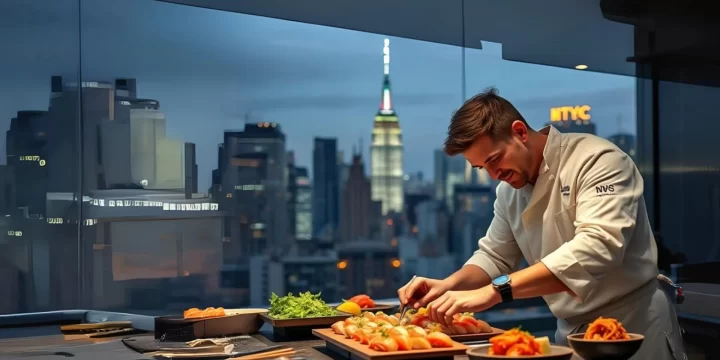
Hiring and Managing Japanese Chefs in the United States: Visa, Salary and Retention (2026)
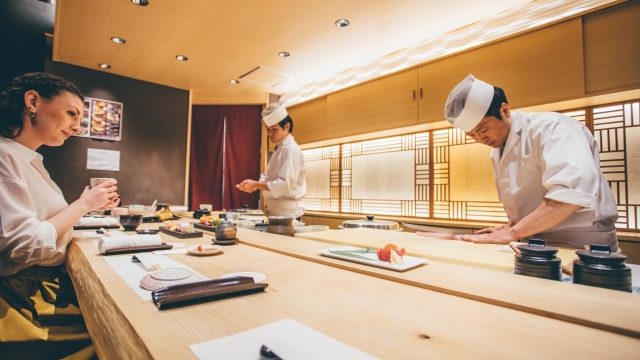
Which Should We Hire, Young Japanese Sushi Chefs in Their 20s or Experienced Chefs in Their 50s?

How to Hire a Japanese Chef in 2026: Visa Costs and Timelines Compared Across 11 Countries