

2,230 Japanese Restaurants in Australia: Where They Open and Who Supplies Them (2026)
Australia had about 2,230 Japanese restaurants in 2025, according to the count published by Japan's Ministry of Agriculture, Forestry and Fisheries, up 12% from the 2,000 counted in 2023. This guide puts the official numbers, the restaurant formats, the price points, the awarded restaurants and the 2026 trends in one place, for the companies that supply, equip, train, finance or franchise those restaurants, and for owners planning the next one.
How many Japanese restaurants are there in Australia?
Japan's Ministry of Agriculture, Forestry and Fisheries (MAFF) counts Japanese restaurants outside Japan every two years from Ministry of Foreign Affairs data. The figures are approximate and include every restaurant that presents itself as Japanese, whoever owns it. Australia has about 2,230 Japanese restaurants in the MAFF survey published on 28 November 2025, up 230 from the 2023 survey. That is the 12th largest country count in the table, after China 63,500, the United States 26,360, South Korea 19,800, Mexico 7,430, Taiwan 7,100, Indonesia 6,580, Thailand 5,920, Brazil 4,520, France 3,390, Canada 3,080 and Russia 2,520, and just ahead of Malaysia 2,200 and Italy 2,160. Australia holds about 80 percent of the Oceania region, which MAFF puts at about 2,800 restaurants in 2025, up about 10 percent from about 2,500 in 2023. New Zealand has 500, Palau 10 and Fiji 10. MAFF attributes the Oceania increase to rising demand for Japanese food linked to growth in travel to Japan. Worldwide the count fell to about 181,000 from about 187,000, so Australia grew while the global total shrank.
Where are they, and what do they serve?
Academic fieldwork on Japanese restaurants in Australia was carried out in Melbourne and Sydney, the two cities that anchor the scene. The chapter states that these establishments expanded from approximately 500 in 2013 to 2,000 in 2023 nationally. (Iori Hamada, Gastro-cool Japanese restaurants in urban Australia, 1950s to 2023, chapter 9 in Japanese Migrations to Australia, Routledge (accessed 2026-11-05))
Sydney concentrates the hatted Japanese dining rooms. The 2027 Sydney Morning Herald Good Food Guide for NSW and ACT lists four Japanese venues with two hats (Garaku and Omakase by Prefecture 48 in the CBD, Sushi Oe in Pyrmont, Yoshii's Omakase in Barangaroo) and at least two more omakase counters with one hat (Wai's Omakase in Darlinghurst, Mu Omakase in Canberra). (Good Food Guide Awards 2027 winners and hatted restaurants list, Newcastle Herald / ACM (2026-10-28))
The largest takeaway sushi chain started in western Sydney. Sushi Hub opened its first store in Cabramatta, NSW in 2006 and now states that it operates over 200 stores nationwide. (SBS Small Business Secrets (2017-06-25) and 25 Martin Place store directory (accessed 2026-11-05))
Adelaide entered the Michelin map in October 2026. In the inaugural MICHELIN Guide South Australia 2027, the Japanese restaurant Shobosho in Adelaide was listed as MICHELIN Selected and its chef Shakaan Abillion received the Young Chef Award. (Australian Traveller, SA Michelin Guide restaurants (2026-10-14) and MICHELIN press release (2026-10-15))
What do Japanese restaurants in Australia charge?
Published prices from public sources, as of the date shown. They are reference points, not averages.
Awarded Japanese restaurants in Australia
There is no Michelin Guide for Sydney, Melbourne or Australia as a whole. The first Australian selection, MICHELIN Guide South Australia 2027, was announced on 14 October 2026 and covers South Australia only: 1 two-star (Magill Estate Restaurant), 10 one-star, 16 Bib Gourmand and 50 MICHELIN Selected, 77 venues in total. No Japanese restaurant received a star. Shobosho in Adelaide (Japanese) is MICHELIN Selected and its chef Shakaan Abillion won the Young Chef Award. The national benchmark remains the Good Food Guide hats (Sydney Morning Herald and The Age). 2027 NSW and ACT Guide (2026-10-28): two hats for Garaku, Omakase by Prefecture 48, Sushi Oe and Yoshii's Omakase; one hat for Wai's Omakase and Mu Omakase among others. The Age Good Food Guide 2026 (Victoria) lists Minamishima in Richmond at three hats, the top rating, alongside Amaru, Brae and Vue de Monde (reproduced list, see review file). (MICHELIN press release via Kyodo News PR Wire (2026-10-15); Australian Traveller (2026-10-14); Time Out Australia (2026-10-14); Broadsheet (2026-05-13); Good Food Guide lists (accessed 2026-11-05))
- Minamishima, Richmond, Melbourne: Three hats, The Age Good Food Guide 2026
- Yoshii's Omakase, Barangaroo, Sydney: Two hats, SMH Good Food Guide 2027
- Omakase by Prefecture 48, Sydney CBD: Two hats, SMH Good Food Guide 2027
- Sushi Oe, Pyrmont, Sydney: Two hats, SMH Good Food Guide 2027
- Garaku, Sydney CBD: Two hats, SMH Good Food Guide 2027
- Wai's Omakase, Darlinghurst, Sydney: One hat, SMH Good Food Guide 2027
- Mu Omakase, Canberra: One hat, SMH Good Food Guide 2027
- Shobosho, Adelaide: MICHELIN Selected and Young Chef Award, MICHELIN Guide South Australia 2027
What is changing in 2026?
Who owns and opens Japanese restaurants in Australia?
The market is fragmented. IBISWorld describes competition as high and steady and names Advanced Fresh Concepts and Sushi Sushi as the biggest companies in an industry of 2,075 businesses. (IBISWorld, Japanese Restaurants in Australia (June 2026))
Sushi Hub is Australian-founded and franchised. Raymond Chen, James Chen and Leon Li opened the first store in Cabramatta, Sydney in 2006; the chain states over 200 stores nationwide in 2026. Franchisees must have worked in the business for at least five years. (SBS Small Business Secrets (2017-06-25); 25 Martin Place directory (accessed 2026-11-05))
Sushi Sushi, about 180 restaurants, became a subsidiary of Japan's Genki Global Dining Concepts in February 2026, with the incumbent Australian management team staying in place. Genki operates more than 430 stores across 13 countries. (Baker McKenzie (2026-02-27); Inside Retail (2026-02-16))
Advanced Fresh Concepts, the Woolworths in-store sushi partner since about 2011 under the Sushi Izu brand, is a wholesaler of fresh sushi that operates over 200 locations across Australia, with revenue of about AUD 140 million in 2025 and 300 employees including subsidiaries. (IBISWorld company profile (accessed 2026-11-05); Canberra Times (2013-07-18))
Premium counters are led by both Japanese and non-Japanese chefs. Yoshii's Omakase is led by Ryuichi Yoshii; Fishnets in Bronte is led by former Sokyo head sushi chef Sanghyeop Kim; Kirishima in Camberwell is owned by chef Junha Park, who trained at Nobu. A published share of Japanese-owned versus locally owned restaurants is not available. (Crown Sydney (accessed 2026-11-05); Broadsheet (2026-06-09); Concrete Playground (2026-06-10))
Recent openings and expansions reported in public sources:
- Iki Dining opened in Potts Point, Sydney in mid-2025. Chef Masahiko Yomoda, who earned a Michelin star at Arbace in Tokyo, runs a raw bar, izakaya plates and chintan ramen with most small plates under AUD 20. (Time Out Sydney (2025-10-03))
- Yamagen made its Melbourne debut at 6 Portland Lane beside QT Melbourne in February 2026, run by EVT Group with culinary director Adam Lane. The izakaya lists more than 45 sakes and 120 whiskies. (Concrete Playground (2026-02-17 and 2026-01-16))
- Genki Global Dining Concepts announced the acquisition of Sushi Sushi (about 180 restaurants) in February 2026, the largest Japanese corporate entry into Australian Japanese dining in the period. (Baker McKenzie (2026-02-27))
- Fishnets, a 50-seat Japanese-leaning sushi and seafood restaurant from the Table Manners group, opened at 118 Macpherson Street, Bronte in the week of 9 June 2026 with former Sokyo head sushi chef Sanghyeop Kim. (Broadsheet (2026-06-09))
- Kirishima, a 12-seat omakase by chef Junha Park, opened at 622 Camberwell Road, Camberwell, Melbourne in mid-2026. (Concrete Playground (2026-06-10))
- +81 Sushi Kappo, a 12-seat omakase counter led by head chef Ikuo Kobayashi, opened on Montague Road, West End, Brisbane in 2026 and was named among Australia's best new restaurants of the year so far. (Broadsheet (2026-07-03))
- Broadsheet's August 2026 round-up of new Sydney Japanese venues lists Tera Bar in Surry Hills, Aenza in Darlinghurst (about 50 seats, 40 wines by the glass), Rorouni in Bondi Junction (18-seat kaisendon restaurant), Mamuki in Glebe and Nana's Green Tea in Haymarket, a Japanese chain with more than 90 stores worldwide. (Broadsheet (2026-08-03))
- Prefecture 48, a six-venue Japanese precinct by the Azabu group at 230 Sussex Street, Sydney CBD, opened in October 2024 with a 42-seat kaiseki room (Garaku) and an eight-seat omakase; both held two hats in the 2027 Good Food Guide. (Broadsheet (2024-09-19); Good Food Guide 2027 list (2026-10-28))
Who supplies, equips and finances these restaurants?
Processed foods make up JPY 21.3 billion, about 56 percent of the total. Agricultural products account for JPY 32.9 billion, fishery products JPY 5.0 billion and forestry JPY 0.2 billion. The top items in 2025 were alcoholic beverages JPY 5.9 billion, sauces and mixed seasonings JPY 4.6 billion, soft drinks JPY 4.5 billion, scallops JPY 2.6 billion, green tea JPY 2.0 billion, soup and broth JPY 1.0 billion, soy sauce JPY 0.9 billion, beef JPY 0.7 billion, instant coffee JPY 0.7 billion and ice cream JPY 0.6 billion. The series runs JPY 12.1 billion in 2015, 17.4 billion in 2019, 23.0 billion in 2021, 31.0 billion in 2023, 32.8 billion in 2024 and 38.2 billion in 2025. (MAFF, Reiwa 7, calendar 2025, agricultural, forestry, fishery and food export results by country and region, pages 21 to 22 (Australia), compiled from Ministry of Finance trade statistics, 2026)
Every one of these restaurants buys fish, rice, soy sauce and sake, fits out a kitchen, trains staff and signs a lease. Washoku Agent places Japanese chefs in restaurants in Australia and 25 other countries, and every placement starts with a restaurant that is opening, expanding or changing its chef. That moment matters to the companies behind the restaurant as much as to the owner. For the importers and wholesalers already serving Japanese kitchens here, see our guide to Japanese food suppliers in Australia.
Hiring Japanese chefs in Australia
Owners who open or expand in Australia ask the same three questions: which visa, what to pay, and how to keep the chef past the first year. Our guide to hiring and managing Japanese chefs in Australia answers them with official visa rules and the positions we have handled, and What restaurants pay Japanese chefs in six countries puts the advertised salaries side by side. To see what individual restaurants offered since 2025, country by country, open What restaurants offered Japanese chefs abroad.
Frequently asked questions
How many Japanese restaurants are there in Australia?
About 2,230, according to the survey published by Japan's Ministry of Agriculture, Forestry and Fisheries on 28 November 2025. That is up 230 from about 2,000 in the 2023 survey. IBISWorld counts 2,075 businesses in the Japanese Restaurants industry in 2026.
How big is the Japanese restaurant market in Australia?
IBISWorld estimates revenue of AUD 2.4 billion in 2026, after annualised growth of 3.3 percent over the five years through 2025-26, with a 1.5 percent dip expected in 2025-26.
Which cities have the most Japanese restaurants in Australia?
No official city breakdown is published. Sydney and Melbourne are the centres of the scene in academic fieldwork, Sydney holds most hatted Japanese venues in the Good Food Guide, and the largest takeaway chain, Sushi Hub, started in western Sydney in 2006.
Does Australia have Michelin-starred Japanese restaurants?
No. The only Michelin selection in Australia is the MICHELIN Guide South Australia 2027, announced in October 2026, and none of its 11 starred restaurants is Japanese. Shobosho in Adelaide is MICHELIN Selected and its chef won the Young Chef Award. Sydney and Melbourne use Good Food Guide hats; Minamishima in Melbourne holds three hats and four Sydney Japanese venues hold two hats in the 2027 guide.
How much does Japan export to Australian restaurants and retailers?
Japan's agricultural, forestry, fishery and food exports to Australia were JPY 38.2 billion in 2025, up 16.6 percent, making Australia the 10th largest destination. Alcoholic beverages, sauces and seasonings, and soft drinks are the top items; scallops and green tea follow.
Opening or growing a Japanese restaurant? You can bring in an experienced Japanese chef for a defined piece of work, such as a new menu, training for your team, or help with an opening. See how a project works.
Sources (checked 2026-11-05)
- MAFF, Japanese restaurants overseas by country and region, Reiwa 7 (2025-11-28)
- MAFF, Japanese restaurants overseas, regional totals (2025-11-28)
- MAFF, Japanese restaurants overseas, trend table 2013 to 2025 (2025-11-28)
- MAFF press release page (2025-11-28)
- MAFF, 2025 agricultural, forestry, fishery and food export results by country, Australia pages (accessed 2026-11-05)
- JNTO Australia, Record one million Australian travellers visited Japan during 2025 (2026-01-22)
- IBISWorld, Japanese Restaurants in Australia industry report (June 2026)
- IBISWorld, Japanese Restaurants in Australia, number of businesses (accessed 2026-11-05)
- IBISWorld, Advanced Fresh Concepts Pty Ltd company profile (accessed 2026-11-05)
- Baker McKenzie, Genki acquires Sushi Sushi (2026-02-27)
- Inside Retail, Sushi Sushi sold to Japan's Genki Global Dining Concepts (2026-02-16)
- Newcastle Herald / ACM, Good Food Guide Awards 2027 winners and hatted restaurants list, NSW and ACT (2026-10-28)
- OnlyMelbourne reproduction of The Age Good Food Guide 2026 hat list (2025-10)
- MICHELIN Guide South Australia 2027 press release via Kyodo News PR Wire (2026-10-15)
- Australian Traveller, SA Michelin Guide restaurants and special awards (2026-10-14)
- Time Out Australia, every South Australian restaurant that earned a Michelin star (2026-10-14)
- Broadsheet, article on the Michelin Guide launching in Australia (2026-05-13)
- CreditorWatch, One in eight cafes and restaurants closing (2026-08-19)
- Monash University research portal, Hamada, Gastro-cool Japanese restaurants in urban Australia (accessed 2026-11-05)
- SBS, From bread baker to sushi king: how Sushi Hub took over the market (2017-06-25)
- 25 Martin Place store directory, Sushi Hub (accessed 2026-11-05)
- Canberra Times, Sushi competition heats up in the suburbs (2013-07-18)
- Retailbiz, Longest sushi train in the southern hemisphere arrives in the Sunshine State (2024-05-29)
- Crown Sydney, Yoshii's Omakase (accessed 2026-11-05)
- Time Out Sydney, Iki Dining (2025-10-03)
- Time Out Sydney, The ultimate guide to Sydney's best omakase diners (2023-09-26)
- Broadsheet, Australia's best new restaurants so far 2026 (2026-07-03)
- Broadsheet, First look: Fishnets, Bronte (2026-06-09)
- Broadsheet, Six to try: Sydney's best new Japanese restaurants and cafes (2026-08-03)
- Broadsheet, Coming soon: Prefecture 48 (2024-09-19)
- Concrete Playground, Kirishima, Camberwell (2026-06-10)
- Concrete Playground, Yamagen Melbourne (2026-02-17)
- Concrete Playground, Restaurants coming soon in 2026 (2026-01-16)
- 1,140 Japanese Restaurants in Singapore: Where They Open and Who Supplies Them (2026)
- What Restaurants Offered Japanese Chefs Abroad: Recent Positions and Packages by Country (2026)

Related posts
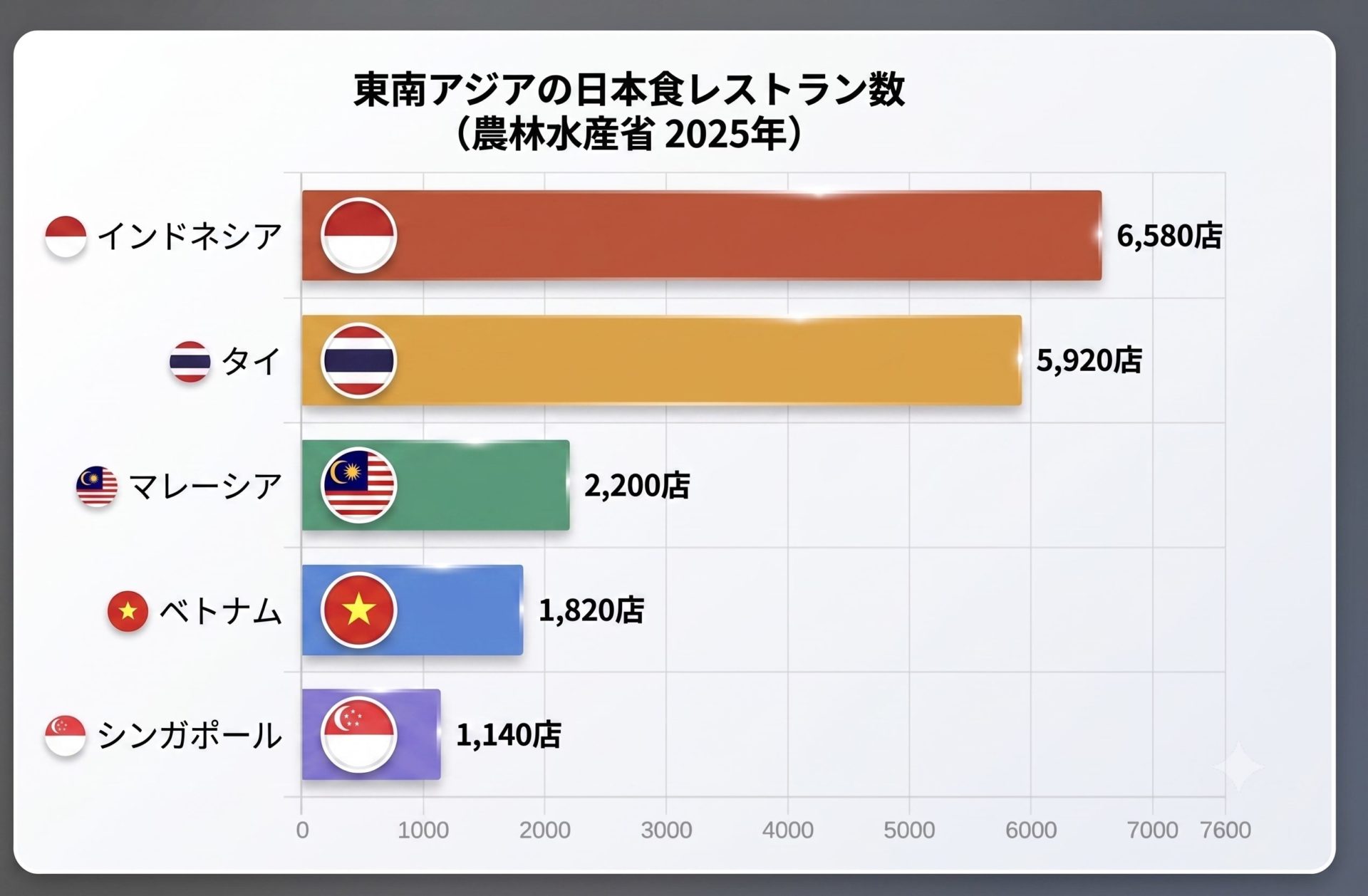
1,140 Japanese Restaurants in Singapore: Where They Open and Who Supplies Them (2026)
5,920 Japanese Restaurants in Thailand: Where They Open and Who Supplies Them (2026)
1,820 Japanese Restaurants in Vietnam: Where They Open and Who Supplies Them (2026)
